Thursday, January 14, 2010

"Masters of the Dew"--For My Haitian Students and All Whom They Love


The news from Haiti pours out upon the world; it took so long and so much death for this country, so marked by colonial history and resistance to its grip, to be seen again. Pushed to the edges of world concern, of American concern, by matters of race and class, by its lack of wanted resources--even its people mostly have a hard time gaining refuge in the countries that have caused so many of its losses--Haiti, as close to America as Cuba, the dismissed country, the invisible people, to those in power. Haiti, who sang of a people's collective urge for freedom, while Napoleon still rode on the back of his armies, Haiti whose writers dreamed of unending collectives, workers united to turn drudgery into national wealth, Haiti where painters and poets found languages of color and shape to bring to the world their unique vision of Africa in the Caribbean, Haiti whose people make an art form of inventing living languages and religions that wear the vestments of the past but invoke new songs of the magic of the spirit. In patois and in French, using all they have to create, always create. I am thinking of my Haitian students, of Firenz, of Yvonn, of Isabella, of Darby Bruno with whom I read Jaques Roumain's "Masters of the Dew," over 30 years ago, of the great contemporary Haitian writer, Edwidge Danticat, who in the 1990s came and spent a day reading her texts with our students, how they poured over her words, and held them up for her to see in their word-worn hands. Of Darby, stocky and tough, taking the small role of the prison van driver when we were performing Bessie Head's "Collector of Lost Treasures." How he created a whole life lived transporting the hopeless to their final home in his portrayal, Darby who struggled every day to make it to the unwelcoming Queens College campus. Of sitting across from a two of my Haitian women students on the Flushing line subway and how they covered their mouths with their hands when they turned to speak to each other--we are sometimes ashamed of speaking Creole, here at the College, they had told me. Patois under the stern gaze of French, still finding hidden places to keep a people alive. And the last day of classes one term now lost in all the years, when a group of my students presented me with two Haitian wooden mortar and pestles, the fine grinding tools of bush survival, of savory creation. When I had to chose among my possessions for the final move of my life, for my own dispersal, I carefully wrapped them so they would arrived unharmed from their 23,000 mile flight across the Pacific seas.
It is you I think of now, my Haitian students, with all your cultural riches, with all the strengths of your spirit and intelligences, with all your determination, with your knowledge of political struggles and the cost of national courage in the face of the killing thuggery of Poppa Doc and his American supporters. Know that you have never left me, that the time I spent learning from you, embodied all the wonders of my life as a teacher. As I write these words, I see the face of the old man, who still remembers Africa, in the film of "Black Shack Alley," set in the sugar cane fields of Martinique, I see the face of the pipe- smoking grandmother who did all she could to keep Joseph out of the killing fields; you sat and watched that film with me, in a dark room on a cold winter morning far out in Flushing, Queens, in a temporary Quonset hut that was our SEEK classroom, and told me, life was hard but a people's desire to live and create, to refuse divisions of class and race, was greater still. Breath, eyes, memory now more then ever, dear Haiti.

Sunday, January 3, 2010

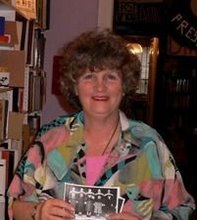
La Professoressa in Paris, 2009 and in my Life, 1998


I write of misused powers, of the hardening of the heart under the shadow of nationalisms, under walls of exclusion, but I also carry the voice of my lesbian body, of my lesbian histories, into all these stony places. On my desk amidst all the commuinques from Cairo, I found this poem, written by one woman to another.
Saftey
We have already travelled worlds together
in each other's curves and words
and hollows
although we only just met
We have already opened doorways
to knowledge and loneliness
and love
although we thought they had been closed with finality
We have already changed shape
to embrace unfamiliar waves and symbols
of desire
although we thought we knew who we were
We
two women together
have created the fragile shifting fragments of a refuge
in the midst of life's great dangers.
For Joan, 8 March 1998

Our January Vigil, a New Year, To The Streets Again


Here is our flyer for our January Women in Black vigil:


Make 2010 The Year We End Israel's Blockade of Gaza


Since just days before Christmas, 2009, over 1300 citizens from 42 different countries have travelled to Cairo as a transit point to Gaza where they would join over 50,000 Palestinians on December 31 in a Gaza Freedom March to protest the continuing siege of Gaza. Conceived during Code Pink's delegation to the Gaza Strip after the Israeli Cast Lead incursion, the organizers envisioned a massive, peaceful nonviolent show of international solidarity with the Palestinian people. The had envisioned several days of commemoration of those who died during the winter attack, several days of bearing witness to the rubble, the unreconstructed homes, and the widespread destruction of the possibility of healthy daily life.


Women in Black, Melbourne, dedicates this vigil to the international Gaza Freedom Marchers, young and old, including 85-year old Holocaust survivor Hedy Epstein, who have been stranded in Cairo, after the Egyptian government decided to block their transport. Like freedom marchers from other times and other struggles, they are helping each other to survive on the streets, in blockaded hotels, in the face of massive police presence. All we ask of you is to be aware that thousands of miles from here, ordinary people are risking their lives to end the suffering of the people of Gaza. Several days ago, thousands marched in Gaza and in Israel to the Israel-Gaza border, asking for an end to the blockade and renewed dedication to peace efforts. For first hand accounts of what is happening to the freedom marchers and their supporters, please go to Gazafreedommarch.org or to our website, Women in Black.org.au.


These people, ordinary citizens of Gaza, of Israel, of 40 other countries, want another kind of world where children do not play amidst the ruins of their homes, where young people have hopes for the future, where national hatreds to not reign supreme over international negotiations for peace. A new year, let us make it one that honors human life and all its joyous and complex possibilities.


We, the members of Women in Black, wish a happy and peaceful New Year for all.

Wednesday, December 30, 2009

I Thought I Was Saying Good-bye, but...


Sometimes my body fails me and I think it is time to fall quiet, and then people take to the streets, travel thousands of miles, to remind the world that a year ago, a terrible thing happened to an already imprisoned people, the people of Gaza, a year of days has turned and still there is no let up to their suffering, their deprivations--America looks on and moves not, Egypt looks on and moves not, Israel cuts into the freedoms of its own people more and more to insure the punishment, the humiliation, the exhaustion of the Palestinians both in its borders and beyond. But around the world, women and men who cannot live with the never ending roll call of injustices, are moving--now on the streets of Cairo, 1400 people are pushing against the wall, struggling to break the siege, to enter the walled in towns of Gaza. Like freedom marchers before them, they have met phalanxes of police, of refusals, of entries denied and like the Freedom Marchers before them, they gain strength from each other and build the alliances that are needed for the duration of the struggle.
From Dorothy, "Critical Situation in Cairo with Gaza Freedom Marchers," December 28, 2009, 5:07 PM:
We are writing to call your to your attention a critical situation that has developed in Cairo, Egypt over the past week. Since just before Christmas over 1300 citizens from 42 different countries have travelled to Cairo as a transit point enroute to Gaza where they would join over 50,000 Palestinians on Dec. 31 in a Gaza Freedom March to protest the continuing siege on Gaza...after months of preparation and consultations with the Egyptian Government, Egypt abruptly announced that these peace marchers would be denied entry into Gaza, could not display any posters or banners, and could not organize or participate in any peaceful symbolic commemorations of all the civilian deaths in Gaza a year ago and the continuing suffering of the Palestinians in Gaza today..."
From 59 year-old Starhawk's e-mail out of Cairo, Dec 29, 2009:
"But finally I escaped and went off to the French Embassy, with Elizabeth, the young anthropologist I met on the plane, and Max, a cheerful young man with a giant Palestinian flag which he has managed to unveil on the pyramids, the Eiffel Tower, other key monuments. They were talking about Jewish organizing and friend who had burned out and Elizabeth said, "You just have to understand that your whole life is going to be about resistance......[I think of Lepa's words a decade ago, her fist banging on the archives' table in my old apartment, "who said we would win in our lifetime, fighting fascism, we must do what we can in our own time, the struggle will continue."] ...We went back to the center of town, to the steps of the Journalists' Syndicate where our hunger strikers were holding a vigil. Twenty-two people are on a hunger strike...the steps of the Journalists' Syndicate are like a stage and it was filled with people, the hunger strikers in the center, flags and banners all around them."
From Cheryl in Cairo, December 29, 2009, 4:03 PM:
"I am having much trouble with my blackberry and anything to connect me to the outside world, nonetheless, my spirits are good. Indeed they are blocking us from entering Gaza. Yesterday we were at the World Trade Center/UN building [in Cairo] and the police surrounded us for hours--I stood eye to eye with young soldiers--most of them so very young (some no older then 16 or 17)--we taught each other how to say peace in our respective languages, we laughed, one guy even cried a little when I told him he ein halwah/beautiful eyes--but don't get me wrong--I am not naive about how dangerous this could get at any moment. It is just that, once again, I ma reminded that when given the opportunity to see each other's humanity, really look at each other and try to see each other, walls can come down.
The same walls that seem so impenetrable to get from Cairo to Gaza on this march.
When I think of the 1400 people who have come to participate in this effort from all over the world, I truly feel in my heart that one day this blockade will be lifted.
We will find a way to get the aid and the school supplies including the 12 laptops purchased by our group. I am also bringing something precious from my friend, Noura. The day before we left, she gave me her beautiful floor-length engagement dress, saying 'Some young girl will want this for herself--to celebrate her own engagement." So I have brought the dress to Cairo and am determined that it will get to Gaza...because it signifies that that young woman is creating a future for herself, that she expects to have a future. One of the most devastating affects of violence and the long lasting aftershocks of trauma is the loss of a sense of future.I stay on course to give that young woman a dress and to say to her and to you that I believe in a better future for Palestine.
Many of us are joining Hedy Epstein, an 85 year-old survivor of the holocaust, in a hunger strike--hard for me to pass by the shwarma, balawa and figs I see on the streets, but I am hungrier for this blockade of our march to get the attention of the world and I am hungrier yet for peace and justice. [Hudson Valley Residents on the Gaza Freedom March, http://hudsontogaza.blogspot.com]
Dresses, school supplies, bandages--an elderly Jewish woman sitting on a Cairo street, refusing to eat in the name of histories of injustices, young and old people brought to these streets like in other times we were brought to the streets of Selma or Sharpesville or Washington, D.C., trying to break through the killing walls of national agendas with only civilian bodies, an unarmed people, demanding that the rest of us who live our lives as if the Wall, and all that goes on in its shadow, was not our concern. I have not read one word of what is happening in Cairo in an Australian newspaper or seen one moment of coverage on the news stations. In my daily NY Times summaries, I have not see one mention of the freedom march. But in this other world, where words can soar over national boundaries and agreed on silences, words and images are pouring out. Do what you can to honor the best of the human spirit. For images, go to

Tuesday, December 22, 2009

One Year Ends


Yes, Khulud, you are right. It is the resistors who make new roads possible, who push back the confinements, who broach the walls. It is the resistors on both sides of entrenched nationalisms, of territory and of gender, who make possible the breath of joy between the stones. No matter what the governments do, you and all the others who take on the edicts and the closings and the rulings and the documents of erasure, will change the face of human history.


I want to take this time, the end of one reckoning of the change of years, to thank every one who read my words, who wrote to me, who challenged me, who questioned me, who gave me heart. I have one more thought to share--and I have been 70 years slow on this one. Last week, I saw, had to see, the frenzied fear of a pig waiting for its death. The animal tried to chew through the metal bar of his last cage to escape his slaughter. I looked into his living eye, and never will I forget it. I think of walls that block out the human faces of those called our enemy, I think of the drone planes that now kill at will, machines trained to erase human lives, I think of all the animals that had a life and whose flesh I ate to feed my human life, not so special as to demand so many eyes to go blank. Anonymous deaths from which we benefit. And I think of the people who work in abattoirs, who hear the final screams of living beings all the hours of the day, who need their jobs, who grow used to their jobs, it is just a job. How did we come to this? Yesterday, Di was pulling out of a parking spot, and I looked into the yellow eye of large dog in the back seat of the car next to us. His eye followed mine, his head turning, as our car slowly pulled out and I saw in that yellow look nothing I knew for sure except life, a watching of the moment, silent and steady, each of us tied to our form of deciphering, a quiet agreement to honor the differing rights of observation, the differing workings of the heart and head.


To all my friends, old and new, to all my lovers, old and new, to all who showed me what I needed to see and to all who waited with me while I failed and tried again, who sat by my bed or listened late into the night to the same old fears, to all who helped build with me the archives of the forgotten and the judged, I touch with a life time's gratitude.


I have been thinking this so-called holiday season of the children of Gaza. How do they look upon the world who seems so to have forgotten what makes a child take joy in life, even a child of Gaza. The children of Gaza stumbling over the stones of homes that offer no shelter, not from nations casting lead or from history. They look out at us, framed by loss, by roads that go no where, they stand in their own ruins, too young to have known freedom of movement, to have run down roads that lead to larger freedoms in their own land. Like other children who posed too difficult a question to their times, they seem to fade from view even as they look at us. The children of Gaza.

Monday, December 14, 2009

Heat


It is
6:30 in the evening here, an early summer day, and the heat is pulling out all the moisture we harbor within. I sit at the bus stop, we have no subways here, but trams and buses and trains that run on the surface with people waiting at gaited fences to continue crossing the street, like one sees often on the news back in America,the awful sight of a car crushed on the railroad tracks, the wooden railing not doing its job of holding back the drunken driver or the daring teenager racing against the metal monster. Tomorrow, we are told on all the news outlets, will be one of the danger days, in the low hundreds, and country towns all over Victoria and New South Wales are on the alert for bush fires. Those of us in the city will hunker down in our houses, flats, take refuge in the movies; here the heat is like nowhere else because Australia sits right under the void in the ozone layer, and your skin knows it. Last year, Daniel, Joel, Di, Cello and I spent the day behind shuttered windows, drinking smoothies and playing cards. Every once in a while we would step out onto the deck to test the severity of the day and quickly we withdrew, it was like walking into fire. While we hid, hundreds in country towns around Melbourne where dying, caught trying to save their homes, or in their cars or in the middle of a field. The last time we stepped out on the deck, we smelled the burning dust, the fire- strength carried on the winds. For a moment I thought of another time of destruction and mortality carried on the wind, that day in September when on my upper West Side window ledge, there was a chalky tragic dust. I live in a new geography, and I have come to know and share the fearful look upward at a pitiless sky, so blue you would think it is an ocean but in it lie all the deserts of the world.