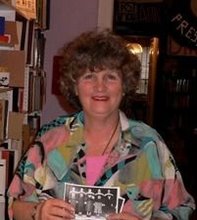
Daniel and I sat--you have already met him--he is my confidante, my pal, my techno teacher, his youth my bridge forward--together taking in the wonders of the human face when it is moved, when it is hopeful, when it is unfettered from ghettoes and niches, when it can see the past and the future as human ways, not edicts of power. We were watching the Democratic National Convention waiting to greet Barack Obama; my tears have not stopped flowing from when Kennedy marshaled all his strength to walk one last time to a political podium to usher in a new time--as a cancer survivor myself I knew what his thin white hair signaled--then Michelle Obama's speech, a new woman on the national scene speaking of her father and his weak but always loving hands --I know why we are told these stories but they are real lives and so much better then the cold blooded grin of Karl Rove--and then Hilary Clinton, a woman I have never warmed too but, boy oh boy, I did these last days. She rose above herself, the most when she stood next to David Patterson, surrounded by the New York delegation, calling for the unanimous nomination of the man who was putting the Clinton time in the past, how much I missed my city then, how proud I felt of that staunch group of New York faces. I know I am gushing, but for so long those of us who found ourselves, our deepest and in some ways bravest selves in the 1960s have listened for so long about the end of that time of social dreaming, the end of the visions of equality and collective possibilities. How often have I said, we were not all stoned, we were doing things! Marching across bridges and mountains to end the war, we faced the bayonets around the Pentagon and I was lucky enough to be one of the marchers out of Selma--the second time around--when hundreds of us passed over the Petty Bridge on our way to Montgomery. We have come back, in that Colorado gathering, 80,000 strong to hear a 47 year old man tell us America can lift its head again, out of the torture chambers and the corruption of K street, out of a war in which we are not even allowed to see the coffins of the dead, out of the sneers and arrogances of the Cheneys and Rumfelds, we can see higher and deeper into our shared humanity. Daniel, 32, and from a working class family in south Australia, and me, weeping into tissue after tissue, his 68 year old lost New York pal, sharing this time, Obama's words, the faces looking up at him, Daniel's hand reaching for mine to comfort, to hold this shard of time together in our intergenerational bond. I must return to New York if Obama wins, to this new land. Oh Paula, I was talking to you in my head, saying look at this girl, will you look at this!
Thursday, August 28, 2008
Monday, August 25, 2008
Democratic Convention in Melbourne
Here it is a gray Melbournian winter day, around 1:30 in the afternoon. I have just turned off CNN's coverage of the Democratic Convention--profoundly saddened by the endless refrain of the commentators: the Obamas have to prove that they are like every body else, over and over, as if African-American lives are a foreign substance in the American imagination. This is the performance of other that has no basis in fact--African-American culture is American culture, African-American families are American families, African-American struggles for economic security are American struggles. The Obamas are not freaks of nature that have to continuously prove how like "us" they are--this mythical "us." From this distance I see how hopelessly mired in self admiration and lust for blood this version of the US media coverage is--and CNN is countries ahead of Fox--others have said you can for tell the ruin of a culture by its sexual practices, I say a much more accurate gauge is by the popular success of killing propaganda machines like Fox "News." But then I would--being a queer pinko Jew.
Sunday, August 24, 2008
August 22, 2008--Queer History on Two Continents
On a cold night in August, the Australian Lesbian and Gay Archives had a wonderful 30th anniversary celebration in the cavernous space of the Fitzroy Townhall. Now I know I am writing for some who do not know the streets of Melbourne or its municipalities, but it was very generous of the Fitzroy council to make this large and historical meeting place available to the queer community. Over 300 people attended, sitting at tables decked out with pink balloons, cheering on the bubbling voice of Julie McCossin, a leading radio talk show celebrity here, who tirelessly lead us through the evening of interviews with founding members of the archives, slide shows, queer history highlights with Dennis Altman, Daniel Marshall and Esther Singer, Kaye Sera's uplfting drag performance, dinner and finally a few words from me and Graham Willard, the president of ALGA. As happens here, the evening began with welcome to country, conducted by Annette Xiberras, a Wurundjeri elder and her young daughter. These welcomes remind us all that we are occupiers of another people's land and it with their kindness that public events proceed.
One of the queer elders I met that night was Val, a woman in her 80s who was the hostess with the mostess for the camp (the Australian term for queer in the pre60 days) community, welcoming lesbians and gay men to Val's Coffee Lounge on Swanston Street from 1951-52. The place to meet, as it was known, had two levels with seats for 80 patrons on each floor; a royal blue carpet and mauve walls set the scene and Val herself was often seen wearing a black Hamburg, a mannish suit and sporting a silver-topped cane. She was never intimidated out of being herself, she said in an interview for a soon to be published book on Melbourne queer history. Val and I were introduced to each other by Liz Ross, an archives volunteer who is also writing a book on the queer left movement in Australia. As I addressed the crowd, looking over the enlarged documents from the archives collection that hung around the chamber, I felt how lucky I have been in my life to be part of two groundbreaking historical projects, LHA and ALGA; I saw so clearly the connections between histories, the moments of personal delight that outlasted bigotries, the strength of communal projects that changed laws and the fragile cultural artifacts, once despised, now a people's heritage.
La Professora and I left before the dancing started--it had already been a long night. She kept me steady as I labored down the steps, my leg just not working; as we slowly made our way to the car, a handsome slim man drawing a luggage case after him, stopped and asked if we needed help--"You're Kaye Sera, aren't you--we enjoyed your performance so much," I said. He nodded bashfully and we all kept walking into the night.
Monday, August 11, 2008
The Colonizer and the Colonized
Many young Palestinian women and men are losing assured places in international universities because the Israeli government is refusing them the right of passage out of Gaza. No argument can be made in support of this heart-breaking stance. As a writer, a teacher, as someone for whom education meant all in my life, I ask you to be part of this campaign to end this most cruel and un-Jewish embargo on the right to learn. Go to http://www.trappedingaza.org/ to sign a petition. And more, think about the impact of all these cumulative acts of institutionalized cruelty on the Israeli psyche, on all of us.I want to thank every one who has written me to tell me of the typing error that made linking to petition site impossible. I know you are there. I will take up writing again--but first I want to commemorate the passing of Mahmoud Darwish, the Palestinian poet who wrote of exile and yearning for place, for a return to his heart-known land. I did not know of this poet before his death; La Professora and I went with Alex to a viewing of two excellent films, "The Land Speaks Arabic," and "The East Jerusalem Story," sponsored by Women for Palestine and Australians for Palestine and there Sonya, a tireless repesentative of Women for Palestine, called our attention to the death of the poet with a short film she had made in his honor, so for the first time I heard his words. I have come to realize that we must know each other's poets, that it is easy to dehumanize a people when their beloved poets are hidden behind our walls of cultural certainty. How little I know of Palestinian culture, I realized, of Arabic culture generally. I have heard the war cries from both sides; now is the time for the poets.
Darwish was born in a Palestinian village destroyed and "cleansed" by the Israeli army.
In Jerusalem
by Mahmoud Darwish (1941-2008)
Translated by Fady Joudah
In Jerusalem, and I mean within the ancient walls,
I walk from one epoch to another without a memory
to guide me. The prophets over there are sharing
the history of the holy...ascending to heaven
and re turning less discouraged and melancholy, because love
and peace are holy and are coming to town.
I was walking down a slope and thinking to myself: How
do the narrators disagree over what light said about a stone?
Is it from a dimly lit stone that wars flare up?
I walk in m sleep. I stare in my sleep. I see
no one behind me. I see no one ahead of me.
All this light is for me. I walk. I become lighter. I fly
then I become another. Transfigured. Words
sprout like grass from Isaiah's messenger
mouth: "If you don't believe you won't believe."
I walk as if I were another. And my wound a white
biical rose. And my hands like two doves
on the cross hovering and carrying the earth.
I don't walk, I fly, become another,
transfigured. No place and no time. So who am I?
I am no I in ascension's presence. But I
think to myself: Alone, the prophet Mohammed
spoke classical Arabic. "And then what?"
Then what? A woman soldier shouted:
Is that you again? Didn't I kill you?
I said: You killed me...and I forgot, like you, to die.
Wednesday, July 30, 2008
An Archival Moment, 1979, Rota, Joan, Deb and Mabel
Moments of Petty Thievery
I have turned into a petty thief in my old age, but not all circumstances bring it out in me. My fall into crime, and believe me, coming from my benighted family, it was not a long way to fall, but I have walked the straight and narrow ever since I was a kid in the early 50s living with my aunt Mimi and uncle Murray in Bayside, Queens and was tempted by a bowl of little red and blue plastic ponies. While my aunt was in the back of the shop--some sort of auto repair place,I seem to remember--I couldn't resist cheering my orphan self up with a handful of these ponies, stuffing them down my sweater--but I was undone by my early chivalrous lesbian leanings. As my aunt and I were about to leave the shop, I with many new bumps under my sweater, a lovely woman entered and dropped her bag. I immediately bent down to pick it up for her and all the ponies tumbled out of their hiding place onto the gray-squared linoleum. I don't remember anything around me at that instant, no shop, no woman, no aunt only my huge shame and panic; I bolted from the shop, much as the ponies would have if they could, and fled as far into the fledgling neighborhood of Bayside as I could. Many many hours later, I found my way back to my foster home. Ponies and women, an early fatal mix.
Scarred by that early betrayal of conflicting desires, I was never tempted again until in my 68th year, when I accompanied La Professora into a home furnishing emporium here in Melbourne so she could pick out book shelves and desks for our study back at 4 Fitzgibbon. She has all the money now, my American teacher's pension fastly losing spending power and doctors' bills taking the rest, so I am a mere bystander as La Professora so kindly upgrades our home. As she bent over blueprints with a nice young man, I wandered about the place, wanting to take a closer look at the paperback books it was using for display purposes only to show off its various wood particle shelving. I was enjoying seeing old friend detective writers when I came across a yellow and blue book with the words, Courage Classics, on its side--I raised my eyes to look closer and there it was, "Collected Poems of Emily Dickenson." For display purposes only. How could I leave that poet, so far from her New England home, so needing of human touch, so rich in her interrupted lines, as mere book shelf dressing. As La Professora negotiated a hefty fee, I simply took Emily, holding her in my arms, and left the store. She now sits next between May Swenson and Auden. It all made perfect sense to me.
And then the other night, La Professora decided she wanted to go to a home renovating workshop in St Kilda. We arrived early on a dark cold night and took our seats in the waiting area where tea and coffee were being served, which my darling scorned in favour of a glass of house red, and platefuls of cookies that were too delicious to resist. I asked the waitress if they could be purchased and she said no, so before we left the lounge, I did something I had learned from Ms Hampton, a dear friend who always made the most of what was available, I simply wrapped a handful of the contraband in a napkin and slipped it into my bag. Once inside the lecture hall, I dozed a little as the speaker talked about large sums of money and property, property. On the way out, I noticed a jarful of blue plastic ballpoint pens; one quick grab and a handful went into the bag. I was beginning to see a connection here--anytime large sums of money are being discussed, I immediately avail myself of what ever is free, or at least, under valued.
We ended the night with a chicken soup and stuffed cabbage dinner at the Scheherazade Cafe on Eckland Street, now for those among you who do not know the realm of the bay side of Melbourne, I will tell you that once Eckland street was the eating, talking place of many European Jews who had fled to Melbourne and this cafe so sadly soon to close was a favorite gathering spot, so think a mix of the Lower East Side and Coney Island. Alix was waiting for us and we caught up as we delighted in the specials and potato salad. Slices of dark pumpernickel caught my eye. Not easy to find in our part of town. As we payed the bill and prepared to leave, I used the old napkin trick again and departed with several slices of this so homey bread in my bag. For one instant I was back in the 60s in the old Ratner's on Second Avenue where I and my other student friends would pretend we were going to have a meal we could not really afford and sit just long enough to kidnap a few of the bagels that garnished every table. Bread in the bag, poetry in the bag, cookies in the bag and finally those blue pens. How can I explain this relapse into antisocial behaviour? Riding back across town, the palm trees of St Kilda growing more distant, La Professora who had seen it all, said "Joan, what have I turned you into?" I looked out at the still foreign landscape, a 68 year old petty thief, my contraband warm across my lap.
Scarred by that early betrayal of conflicting desires, I was never tempted again until in my 68th year, when I accompanied La Professora into a home furnishing emporium here in Melbourne so she could pick out book shelves and desks for our study back at 4 Fitzgibbon. She has all the money now, my American teacher's pension fastly losing spending power and doctors' bills taking the rest, so I am a mere bystander as La Professora so kindly upgrades our home. As she bent over blueprints with a nice young man, I wandered about the place, wanting to take a closer look at the paperback books it was using for display purposes only to show off its various wood particle shelving. I was enjoying seeing old friend detective writers when I came across a yellow and blue book with the words, Courage Classics, on its side--I raised my eyes to look closer and there it was, "Collected Poems of Emily Dickenson." For display purposes only. How could I leave that poet, so far from her New England home, so needing of human touch, so rich in her interrupted lines, as mere book shelf dressing. As La Professora negotiated a hefty fee, I simply took Emily, holding her in my arms, and left the store. She now sits next between May Swenson and Auden. It all made perfect sense to me.
And then the other night, La Professora decided she wanted to go to a home renovating workshop in St Kilda. We arrived early on a dark cold night and took our seats in the waiting area where tea and coffee were being served, which my darling scorned in favour of a glass of house red, and platefuls of cookies that were too delicious to resist. I asked the waitress if they could be purchased and she said no, so before we left the lounge, I did something I had learned from Ms Hampton, a dear friend who always made the most of what was available, I simply wrapped a handful of the contraband in a napkin and slipped it into my bag. Once inside the lecture hall, I dozed a little as the speaker talked about large sums of money and property, property. On the way out, I noticed a jarful of blue plastic ballpoint pens; one quick grab and a handful went into the bag. I was beginning to see a connection here--anytime large sums of money are being discussed, I immediately avail myself of what ever is free, or at least, under valued.
We ended the night with a chicken soup and stuffed cabbage dinner at the Scheherazade Cafe on Eckland Street, now for those among you who do not know the realm of the bay side of Melbourne, I will tell you that once Eckland street was the eating, talking place of many European Jews who had fled to Melbourne and this cafe so sadly soon to close was a favorite gathering spot, so think a mix of the Lower East Side and Coney Island. Alix was waiting for us and we caught up as we delighted in the specials and potato salad. Slices of dark pumpernickel caught my eye. Not easy to find in our part of town. As we payed the bill and prepared to leave, I used the old napkin trick again and departed with several slices of this so homey bread in my bag. For one instant I was back in the 60s in the old Ratner's on Second Avenue where I and my other student friends would pretend we were going to have a meal we could not really afford and sit just long enough to kidnap a few of the bagels that garnished every table. Bread in the bag, poetry in the bag, cookies in the bag and finally those blue pens. How can I explain this relapse into antisocial behaviour? Riding back across town, the palm trees of St Kilda growing more distant, La Professora who had seen it all, said "Joan, what have I turned you into?" I looked out at the still foreign landscape, a 68 year old petty thief, my contraband warm across my lap.
Tuesday, July 15, 2008
From Broadway to Broccoli
Subscribe to:
Posts (Atom)