Sunday, December 6, 2009

Words for Palestine


Words for Palestine, December 6, 2009, Melbourne, Australia


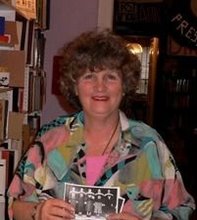
Students for Palestine asked me to speak at a rally held in front of the Park Hyatt Hotel here in Melbourne where the Deputy Prime Minister Julia Gillard was hosting Israel's Deputy Prime Minister, Slivan Shalom. They were discussing, the paper said, Israel's request for help from Australia to help it rehabilitate the Jordan River. This was Shalom's second official dinner--the first in Sydney where the Prime Minister of Australia also welcomed the Israeli government official in glowing terms and never once mentioned the crises that is facing the Palestinians under the present Israeli regime. I was asked to speak as a representative of Women in Black and thus Hellen, Marg, Sue, Geraldine--my Women in Black comrades stood with our banners behind me as I spoke. We clearly were the oldest in presence. Without their support, I could not have accomplished what I had to do. I quote the words of two poets in the talk--I wanted something different, more complex then a typical rally speech--the Palestinian poet Mahmoud Darwish and the American writer, always prophetic in terms of what racial failures would bring to States, James Baldwin. Thank you, Daniel, for the image.


Words for Palestine


Salam Alekhim/ Shalom


I want to thank Students for Palestine for inviting the Melbourne Women in Black group to be part of this demonstration against the uncritical welcoming of Silvan Shalom to this country. I speak with two voices today—as a member of Women in Black, and as a 70 year old American Jewish woman who lost one third of her family in the Belzec Concentration camp. Two voices but one heart—the brutalizing of populations by the use of overwhelming military force, by governmental policies of ethnic cleansing and forced expulsion from family homes, by the unquestioned belief in the right of one people to live a full life while another is condemned to hopelessness , to endless humiliations, to erased pasts, to an impossible present and a murdered future—I cannot, will not, not turn my head or heart away from the connections between my Jewish history and Palestinian history of the last 60 years.


In Haifa, after the first Intifada, in 1987, 5 Israeli women stood in silent vigil dressed in black to protest the Israelis occupation of Gaza and the West Bank. the next week Palestinian women joined the protest and a few months later, 5000 marched through the streets of Tel Aviv asking for peace. Now Women in Black stand in over 30 countries demanding an end to the brutalization of civilian populations and the planet, an end to what seems like a time of endless wars. Here in Melbourne Women in Black have been organizing for an end to the occupation since 1988 (Here I referred to Alix Nissen, a founding member of Women in Black both here and in Haifa and Marg Jacobs who has been involved with Melbourne Women in Black since 1988).


From our flyer: "We stand in recognition of peace activists all over the world, to embrace our common humanity, as a bridge to mutual respect, to remind our selves that seemingly small actions can lead both to change and hope. We make the following promises for the new year—we promise to expose the lies that demonize those who discuss nonviolent ways to end the Israeli occupation. We promise to uphold the judgements of the UN’s Goldstone Report and Breaking the Silence. We promise to stand in solidarity with Israeli and Palestinian activists who face jail for their anti occupation work— with the Shminstim, a group of Israeli teenagers declaring their refusal to serve the occupation,with Mohammad Othman, a Palestinian human rights activist,with Kobi Snitz, with Ezra Nawi ,"


with the women who monitor the checkpoints hoping to reduce the daily abuses of Palestinians simply trying to get to work, with the citizens of Bi’lin who take on the Israeli Defense Force every night, with the members of New Profile, an Israeli anti- militarism group, with the Palestinian and Israeli academics who think and teach critically about the occupation and as a result appear on a hate list of those who must be purged from the academy in the so-called democratic state of Israel,with Gideon Levy of the Haaretz newspaper, with Dr Saida Atrash, the Director of the Mehwa Center, the women’s shelter on the West Bank where every day she and others try to comfort Palestinian women who have lost their homes, and with it any sense of security for their families.


We hear the voices of power easily enough, but the voices of alternate visions, of the questioners of certainties, these we must amplify and honor, these are our deepest hope—As Mahmoud Darwish wrote in his homage to Edward Said: "Then you are prone to the affliction of longing? My dream leads my steps. And my vision seats my dream on my knees like a cat. My dream is the realistic imaginary and the son of will: We are able to alter the inevitability of the abyss!"


The voice of conscientious objector Or Ben-David, a 19 year old Israeli young woman from Jerusalem: "To refuse means to say no! No to the military rule in the West Bank, no to the use of violence as a means of defence, no to patriarchy, no to violence against innocent people, no to war and no to a society that claims to be democratic but forces youth to carry weapons, to kill or be killed. I refuse because I want to make a difference. I want all those Palestinian youths who have lost hope to see that there are Israelis who care and who make a different choice. I want all my friends who became soldiers or who are about to become soldiers to see that things do not have to be the way they are, and that doing these immoral things is not something to be taken for granted, that another way is possible." The author of these words is now serving 20 days in an Israeli military prison.


Know that our numbers, the numbers of dissenters, are growing , that cracks are running down that monstrous barbed- wire topped gray wall that tonight’s honored guest calls a fence, know that more and more of us are not afraid of what they call us—traitors, self- hating Jews, antisemitic Jews, renegade Jews. What we are afraid of is what comes on the horizon when a people’s daily dignity is so insulted, when others so absolutely and brutally control the possibilities of one’s life—James Baldwin, an African- American writer who knew in his bones of daily dehumanization, warned of the the "Fire Next Time." What hope will there be for reconciliation if the settlers keep dancing on the hearts of the dispossessed, if leaders like Rudd and Obama and so many others sit down to feast with representative bullies of the Israeli state, pretending that Palestinian agony does not exist. We have seen in the past the results of this calculated refusal to challenge national cruelties. Read the Palestinian poet, read Darwish—"Do I ask permission, from strangers who sleep/in my own bed, to visit myself for five minutes? Do I bow respectfully to those who reside in my childhood dream?"


Mr Silvan Shalom is the minister for regional development and control of the flow of water--one of the regions he is in charge of is the upper Galilee, the one- time site of al-Birwah, a village razed to the ground in 1948, its people forced to flee and among them the poet I now always carry in my heart, Mahmoud Darwish, and his family—his birth place made invisible except in the words of his poems and on old maps, his very presence made absence, a poet in exile for much of his life, but against the roaring ugliness of Israel's dedication to the eradication of a people, I put the poet’s yearning lovely humanity, “The poem is what lies between a between. It is able to illuminate the night with the breasts of a young woman/it is able to illuminate, with an apple, two bodies/it is able to restore/ with the cry of a gardenia, a homeland!" The poet brings us back to the occupied body, the place of devastation, into the night of war he brings the perfume of longing, our rights of desire.


Long after the world forgets the name of the vice Prime Minister of Israel, it will remember the words of Mahmoud Darwish, the poet, for he honors the wonders of life.


**********


It had been a long day and I had been up all night writing the talk, I was emotionally exhausted from the whole event, my anger, my sadness, my speaking as a Jew and so Marg kindly led me to her car. It was only after I had arrived home, that I received the call from Daniel saying that shortly after I had left, the demonstators had attempted to enter the hotel and were beaten and sprayed with capiscum. A young woman friend of his whom I had met was punched in the face by a member of the police. This morning, our daily newspaper, "The Age," carried a picture of the confrontation and the following caption: "Capiscum Spray used to Quell Anti-Israeli Protestors." I want no more violence. Civil disobediance, yes, in the hundreds of thousands, yes, but no more aggressions provoking more aggressions. Enough of this--we will struggle against the Israeli state as we did against the apartheid South African state but in our own way, with an imagined difference. Blood against blood makes reconciliation impossible. Only the fire's devastation comes this way. We "must alter the inevitablity of the abyss." But I am 70.

Friday, December 4, 2009

Oh Such a Week We Had...


Oh such a hard week we have had, but this afternoon La Professoressa went into that familiar mode--preparing for one of her international trips--rushes to the bank, to her office for needed papers, to La Mananas for two weeks worth of fruit for me, and most importantly of all, off to Richard, her beloved chiropractor who knows all the wayward bones in her back and can charm them back into place. Back home, I iron her just -decided- on- must- have shirts as she packs for her transition from Australian summer to English winter. Cello and I sit on the edge of the bed watching the process, an experienced packer is this woman, so quick, so wisely considered, one medium sized suitcase, one carry on bag with wheels into which go her computer, papers, books. In a few minutes all is ready. She gives me that dreaded nod and I call the taxi, always sad at her going--as the Italians say, partire e morire--taking leave is a little death.
The taxi pulls up, I stand at the gate, with Cello at my feet, his tail hanging low, we hug, kiss good-bye, whisper, "thank you for all you have given me" and so the hard week comes to an end with La Professoressa doing what she loves so dearly, doing what brought us together in the first place, flying off into the night, back towards Europe, her head packed with ideas on women and human rights, her itinerary one of visits with old friends, and classes to be taught, conferences to be attended, London and Paris her destinations. Nothing annoys her now, not the long wait in Bahrain or Singapore, not the dashes to her connections--buses, trains from airports to hotels and back again--not the prospect of sleeping upright for 20 some hours, her back already dreaming of Richard's restorative touch. Ten years ago this delight in leaving her home behind brought her to me in New York, with Cuba's sun still strong on her face, on her arms.
And how we travelled together--to London, to Dorset and the English coast, to Athens and Mykonos, Santorini and Crete, to Paris and Copenhagen, to Palestine/Israel and always to New York. But now Cello and I stand at our front gate and wave good-bye to the Red Head as she pulls away from our weatherboard house on Fitzgibbon Avenue; she is already talking with the Lebanese driver who has posted moments from his lost geographies on his dashboard, and then she turns for a last wave. The taxi disappears down Dawson Street. Cello looks up at me, his dark eyes even darker. Just you and me now, he seems to say. We make a promise to care for each other as best we can in the long weeks ahead until our exuberant traveller returns.


Tuesday, December 1, 2009

Lesbian Herstory Archives Art Benefit!


You don't have to be in New York to help support the Lesbian Herstory Archives and get a wonderful work of art by a New York lesbian artist:

Join Us at the first ever Lesbian Herstory Archives Art Benefit!

Raffle of original artworks by more that 80 artists


Raffle tickets are $100 and can be purchased at http://www.lesbianherstoryarchives.org/

or by calling the archives--718-768-3953 to use a check, money order, Visa, Mastercard

Every raffle ticket holder goes home with an original art work and ensures the survival

of the Lesbian Herstory Archives

For a listing of the partcipating artists, to find out more go to the website!

Date of raffle: December 19, 2009

Alexander Gray Associates--526 West 26th Street, Suite 1019


If you buy a raffle, as I did, from a long way away, an archives volunteer will pick out a painting for you and mail it to you--and what good and bad in a good way taste the archives women have.

Joan's Delight


Thank you, Lepa and Stephanie and all who have commented on my words. Thank you so much.
Daniel is a young man who has been my friend and comrade ever since I arrived in this city. I first met him when he was finishing up his Doctorate thesis and I was on my first Honorary Fellowship tour in the English Department of the University of Melbourne. Oh the ways of the world, that I should come all this way to find my Daniel, a working class lad from Mount Gambia in South Australia who burns with ideas and projects, who is a dedicated volunteer at the Australian Gay and Lesbian Archives and who knows how to schmooze on the phone, not a flourishing art here. Young gay man and old lesbian, how we laugh together.

Wednesday, November 11, 2009

A Night in Caulfield--Written for the Newsletter of the Australian Jewish Democratic Society, November, 2009


Under the gaze of the brave founders of the Bund, captured in charcoal drawings and turn of the century photographs, 60 or so contemporary Bund members living in Melbourne and their supporters gathered in the SKIF Center to honor Chaver Doctor Marek Edelman (1919-1009), the last surviving commander of the Warsaw Ghetto Uprising. This is the second Bund event I have attended here and once again I found the gathering touched by a sense of historical dignity, by a living dedication to the Bund vision of social justice, political freedoms and comradeship.
Under the red Bund banner, sat a portrait of Dr. Edelman and close by was a vase of yellow flowers, symbolizing the yellow tulips Dr Edelman placed for many years at the foot of the Polish monument to the uprising in the Warsaw Ghetto.
We watched news coverage of the funeral procession, thousands it seemed walking quietly down a broad Warsaw boulevard after his casket, Polish soldiers forming an honor guard. The ironies of history. Arnold Zable spoke about his meeting with Edelman last year, after a lifetime of admiration and how direct, clear- headed and pragmatic the freedom fighter was about the hard choices that they had to make in their armed struggle, but Zable emphasized, Edelman did not glorify the use of arms. “He told me,” Zable said, “that he admired those who decided to die with dignity in the camps as profoundly as he did those who died with guns in their hands. He detested the phrase, ‘they went to their deaths like lambs to slaughter.’”
A short except from a two hour filmed interview with Edelman about daily life and resistance in the ghetto highlighted the complexity of Edelman’s humanism. In stark black white, with deep shadows etched on his face, Edelman spoke of the day by day maneuvers, of the decisions of who would live that day and who would die. At times, we heard only his voice while we watched haggard people trying to find a place to hide. This man with an aching heart said if the choice was to save a 15 year old daughter or a 20 year old man, we had to choose the one who could best fight. Shadows and clarity, a terrible kind of clarity.
A three page English translation of a biography of Edelman was waiting on every seat so those of us who did not speak Yiddish could follow along as Bobbi Zylberman spoke in elegant Yiddish. One of the reasons I go to the Bund events is because of the opportunity to hear Yiddish in a living progressive political setting. Dr. Edelman who escaped the ghetto through the sewers of Warsaw chose to stay in Poland where he continued his lifelong support of liberation struggles including the struggle for a Palestinian homeland, a struggle though, he advised Palestinian leaders, that should not use civilians as military pawns. For his willingness to engage the Palestinians, Edelman has become a hero in exile in Israel.
Throughout the evening, people greeted each other, held each other and what impressed me greatly was the large number of teenagers present, all participating in some way in the night’s events. Unlike other Jewish progressive political gatherings I have attended, here there is a true intergenerationalism, meaning that there was another kind of energy in the room along with the historical sadness. Teenagers, speaking Yiddish, flirted and made sure the technology worked. They sang with hopeful voices the old songs.The evening closed with the wonderful singing of The Mir Kumen On Choir, featuring the strong young voices of three singers from SKIF. Once again the proud Bund anthems rang out and all around me, women and men late in their lives, stood as one and sang in Yiddish the Bund words of hope and resistance. In a small hall, with a gray carpet stained from much communal traffic, transpired something humanely wondrous, touched by shadows and song, by lives of courage and principle, by journeys of displacement and fraternity.

Monday, November 9, 2009

Our Time by the Beach on the Mornington Peninsula


Last week, La Professeressa took Cello and me to a new part of our world here, the Mornington Peninsula, green and rolling hills down to the sea, in places reminding me of the Irish coast I saw so many years ago, in the early 60s. Here my breasts hang low and my darling fronts the breeze while Cello cools his nose in the sand. Life is like this, layers of worry, of concern for the dis-ease of others, done in our name, or because we live far enough away to think it is not of our concern, and then the longing just to be in the open air with those we love, to feel the wind and see the sweep of the sea, here so vast, long arcing white foamed waves rolling into the beach, the running steps behind us as we struggled up the sandy path to the ocean of a young woman surfer, her board already strapped around her ankle, her feet flying over the sands to join her comrades already black spots resting on the never still swelling flowers of the sea, no fear in her, no trepidation it seemed--the sea and youth and strength of body were all there for her to pleasure. I thought of the freedom of her movement, the delight of her delights, and wished for all the young of the world to know her joy, the sure steady swiftness of her approach to that which she most wanted.

Sometimes It is Hard...


The more I read, the more YouTube footage I see of home evictions in East Jerusalem, Israeli police and settlers mugging for the camera, smiles, self congratulations in the face of exiled Palestinian families, the cries of women, the confused and frightened looks of the children, the peace observers, mostly women, shoved aside by the young men who are cloaked in national power, guns slung over their shoulders, men too young to have seen the Polish families moving into the homes of Jewish families carted away by the Nazis, the sense of righteous reclamation as Jews were cleared from neighborhoods of Europe, their property, their dignity, their claim to a family history denied--but I will say the words we are not supposed to say. That these soldiers, that these settlers with their bully boy struts, remind me of those Nazi soldiers, those gentile victors who trampled over the evidence of other lives, I as a Jew say Israel, the nation state, has granted unquestioned power to bullies to destroy Palestinian lives, daring the world to stop them. And like once before, so many turn their heads and hearts away, this time not in deference to a mad man but to a nation state that hides behind our history of suffering to mask its own growing fascism.
The image I share with you is of a paperbark tree on my street here, filled with the late afternoon sun of early summer. The bark of this tree hangs in shaggy wide strips that are soft white inside, like leaves of a manuscript. I sometimes collect the shed pages and pile them up on our veranda, the pages of a ancient book or one to be written. This light so filled with the dailiness of natural beauty that has been occurring on this continent for thousands of years is the counter moment to the brutalities I saw in those YouTube eviction films. Palestine/Israel too has a lovely ancient light that is now a silent witness to how terribly we fail our humane hearts.