Tuesday, July 8, 2008

Lepa's Words by the Bay, 2008

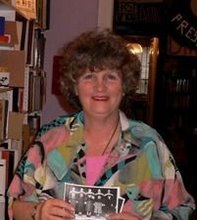
Lepa Mladjenovic 's Speech for the San Francisco Dyke March, June 28, 2008
Dear lesbians whose love for women is kissed by the sun, embraced by the moon, brave lovers of women who were never meant to be, as our lesbian poet told us 20 years ago, here we are--here I am among you--where do I come from? My homeland was a small country called Yugoslavia which fell apart through the war into seven smaller countries during the 1990s. And I come from one of them, Serbia, whose previous regime started and carried out that war.
In wartime--what did we lesbians see?
Of many things, we saw that the moment the universal soldier takes a gun to kill--he makes many enemies and lesbians are among them. War reduces one's identity to only a few symbols, to the nationality of one's name, to religious or tribal symbol. War reduces women's bodies to a battlefield and leaves zero space for lesbian desire.
What did we learn?
--that we lesbians need to be in the anti-war movement, that we must collaborate, ally ourselves and get together with feminists, peace activists, anti-fascists...and some of us did exactly that. Together with Italian, Spanish, Israeli feminists we created the network of Women in Black against War and many women around the world joined in.
--we learned that women's solidarity and lesbian solidarity can be a fact of every day life. Throughout the Yugoslav wars, lesbians and anti-war activists were crossing borders, arriving at odd places to support our voices of resistance. I would not have survived all those years of pain if there had not been many lesbians and activists who came to protest with us, who sent us books of poetry and lesbian cartoons, who came to bring us chocolate and coffee and listen to our stories.
The war in the region is over,
where do I come from?
From Europe and then a little further--South Eastern Europe..
where countries are less regulated by the rule of law and are less supportive of lesbian rights.
I come all the way from Eastern Europe to agree with you, to say:
yes, we need dyke marches,
to say,
we over there need you to be here, so that we over there can feel more powerful and less alone!
We need dyke marches to point out that lesbians are discriminated against as women first of all, and that every discrimination crosses through our women's bodies--our direness, our disability, our race, our nationality...and makes each discrimination feel especially humiliating as we still live in a man's world.
We need dyke marches to remember:
--in the city of Chennai in India, two women, who loved each other from the age of 18, living under hate and pressure from their families, on the 17th of May 2008 embraced each other, poured kerosene on their embraced bodies and set themselves on fire. A week later a group of brave feminists organized a press conference and announced that from January of this year, six other lesbians have set themselves on fire in the Indian state of Tamil Nadu, and that in the last 10 years in the neighboring state of Kerala, 35 lesbian couples have committed suicide.
We need dyke marches to support each other:
--in the town of Bishkek in Kirigizstan, on the 8th of April 2008, five policemen interrupted the meeting of the lesbian group Labrys and interrogated them for four hours. We who have lived through totalitarianism know the only purpose of the police in this case is to produce fear in disobedient citizens. Aren't we those ones? Disobedient Kyrgistani lesbians, disobedient African lesbians, disobedient Latina lesbians...
We need dyke marches:
so this dyke-togetherness, this fantastic feeling of energy from today's march can inspire us to invent unconditional friendship for ourselves, so that we create our own best friend inside ourselves who will tenderly accept every emotion that arises and with an open heart and open mind gently take care of ourselves. So that we can breath out homophobia and cherish the wild Amazon in our soul:
We need the San Francisco Dyke March;
--and I will remind you of hundreds of lesbians from small towns on all continents of the world who will be sitting in dark internet cafes, on the last computer by the wall, in a corner, scared and excited, watching all of us here on youtube--celebrating their lesbian desire as we celebrate our courageous love today.

Monday, July 7, 2008

Caring for the Body


A New York picnic in Central Park last summer with La Professora, Beth and Patti, oh how I walked them all over my city

The Body of the 21st Century--A Tortured Site

In the beginning of the 20th century, W.E.B. Dubois wrote in The Souls of Black Folk that the issue of color, of race, would dominate the next 100 years; now I see that the issue of the body, its embodiment of nation, of security, of desire, of difference and inclusion, of ownership and autonomy marks the 21st -perhaps another way to put it is who controls nakedness. We had just been to see "Standard Operating Procedure," the screen filled with the haunting images of brown skinned men, their scrotums and penises, their testicles, under the control of camouflaged wearing American men and women, asserting their power over the softest parts of the human body, the screen filled with images of lost souls, the lost psyches of the young women, so at a loss in their lives, that as one of them said, laughingly, she cannot control her thumb from giving the all's good sign when a camera is pointed at her yet she is given so much power over others. I remember the beseeching eyes of one of the Iraqi prisoners, as his naked body was pushed into place by his laughing seemingly bored controller, all the liquid softness of the eye, endangered sight, when torture becomes synonymous with "softening up." And the culminating irony that we have a man running for President of the United States mostly on his history of having endured torture in another war in another century and who demands more war, more sites of torture. The images of the film will stay with me for the rest of my life, as they should, the poverty of the empathetic human spirit in this, the most rich country of the world, the best, the finest, the most God blessed so the national lyric goes. Extreme forms of nationalism and the human body, the concern of our times.

"'I realized,' said Mohammed," he was after the award stipend for the Martha Gellhorn Prize. I told him I didn't have it with me. 'You are lying,' he said. I was now surrounded by eight Shin Bet officers, all armed. The man called Avri ordered me to take off my clothes. I had already been through an x-ray machine. I stripped down to my underwear and was told to take off everything. When I refused, Avi put his hand on his gun. I began to cry: "Why are you treating me this way? I am a human being.' He said, 'This is nothing compared with what you will see now.' He took his gun out, pressing it to my head and with his full body weight pinning me down on my side, he forcibly removed my underwear. He then made me do a concocted sort of dance. Another man, who was laughing, said, 'Why are you bringing perfumes?' I replied, "They are gifts for the people I love.' He said, 'Oh, do you have love in your culture?'

"As they ridiculed me, they took delight most in mocking letters I had received from readers in England. I had now been without food and water and the toilet for 12 hours, and having been made to stand, my legs buckled. I vomited and passed out. All I remember is one of them gouging, scraping and clawing with his nails at the tender flesh beneath my eyes. He scooped my head and dug his fingers in near the auditory nerves between my head and eardrum. The pain became sharper as he dug in two fingers at a time. Another man had his combat boot on my neck, pressing hard into the hard floor. I lay there for over an hour. The room became a menagerie of pain, sound and terror."

The next morning waiting for me on this small screen was a forwarded article from Sherry Gorelick in New York City sent out by Jewish Peace News. Written by John Pilger and titled, "From Triumph to Torture,"it tells what awaited Mohammed Omer, a prize winning young Palestinian journalist who lives and reports regularly from Gaza, when he returned to Israel from a celebration of his work in London. At the Allenby Bridge crossing he had been seized by eight Shin Bet soldiers while his Dutch escort waited for him to leave the border building. The only way Mohammed was able to leave was in an ambulance.

"An ambulance was called and told to take Mohammed to a hospital, but only after he had signed a statement indemnifying the Israelis from his suffering in their custody. The Palestinian medic refused, courageously, and said he would contact the Dutch embassy escort. Alarmed, the Israelis let the ambulance go." (John Pilger, The Guardian, Wednesday July 2, 2008)


Over and over, I receive messages of enforced deprivation--two Arab Israeli women film makers not allowed back into the country to make a documentary about daily life in Gaza,
leading international peace activists on their way to Gaza not allowed into the county,journalists not allowed into Gaza--and I think again of how much that day with Gila meant when she took us over the line, literally and figuratively, to see Palestinian towns, to buy a bottle of water from an almost empty shop, the Palestinian shop owner refusing payment after reading the Arabic on our women in Black t-shirts, of the afternoon lunch we had with Hannah, Dalia and Haya in the Palestinian quarter of old Haifa, of how much the survival of our human connection relies on seeing with our eyes, hearing words with our own ears, speaking with our own tongues across militarized borders, and if we cannot, reading the words of those kept from us, knowing the names of the invisible, refusing to draw the curtains of our hearts over the daily crushing of human joy. Armies, corporations, governments speak with huge gestures, encased in power and the fear of losing it--I plead with my friends, those whom I know and those who know me only through reading my words--if you go to Israel, take one afternoon, one hour and cross a border, speak with someone who is kept from you, someone you are told to fear, refuse not to see, hear or speak. These bodies as Duboise said carry the themes of our times, our desires and our illnesses, our histories, how soft they are in duress, the places of desire the softest of all, the hanging scrotum ,the falling breast--my mother's hand on my forehead in those rare times when she was there, trying to pull out the fever, let us honor our caring hands and touch through walls. Torture is the end of our humanity.

To sign a petition against Israel's press censorship, go to Http://mediausa.net/wrmea/petition/

Sunday, July 6, 2008

Introduction to Hebrew Translation of Selected Works

June 7, 1999
Dear Joan,
My name is Lepa Mladjenovic, and I am a feminist lesbian from Belgrade, Serbia. I've been wanting to write to you for some time. I think the first time I thought of it was a couple of years ago, around the war in Bosnia, and I was e-mailing with Women in Black from Israel--Haya Shalom, Gila Svirsky, and I saw your name on one e-mail listing...Now I have A Fragile Union on my pillow and I must write. So first I ask you how are you, and I send my greetings that I have entered in your home, and then I wish to let you know that you are present in me sometimes, in some other lesbians in Belgrade and then in this region as well.

I remember that the first time I read from you was "My Mother Liked to Fuck," it was around 1988, and I was only becoming a lesbian with identity and I read that, and it was a shock to all my senses...I brought "A Restricted Country" many times and gave it to many. Particularly, it was during the Bosnian war time that I needed to read and reread you. From the beginning of wars in this region from 91 on, I felt that I have to invent Ten Thousand ways to let my lesbian desire breath. At some moments during the last 8 years, it was not easy for me to put into words how do I feel when making love with a woman and in the background there is a radio with the news of the war. Killed or expelled or other Fascist acts. In my room, I would not be able to switch off the news, because I thought respect to the killed I will show by not switching off the radio...I was learning lesbian language through your words: "Hundreds and thousands of us held our passions close as we created public beauty in our countries."
Dear comrade Joan,
I send you tender regards,
Lepa


"My Right
To Live
To Choose
To Be"
(The Words, in Arabic and English, on a t-shirt produced by ASWAT, Palestinian Gay Women
2007)
Translations are very special gifts to writers. They are acts of generosity that undertake the most difficult of things--to transpose moments of imagination, so specific in history and language, in geography and culture, into another imaginative world with its own complex continuities. Translations are divine interruptions in the lives of texts. I do not think my work is divine in any way, but I do know that all who have struggled with the specifics of my language choices, who have helped to bring this volume into being, are the best friends a writer can have.
In May of 2007, my partner, Dianne Otto, and I joined our new friends Dalia Sachs and Hannah Safran, in their home in Haifa. This was our first visit to Israel--there is a direct line from the Women in black vigils on 14th street in New York City to us climbing up the worn Haifa steps, with the old port behind us and the sad complexities of this city, this land, above us. The 12 days we spent in Israel formed the most profound journey of my 67 years of life--our hosts, including Gila Svirsky in Jerusalem, forced us to see through their eyes, through their hearts, what peace activists in this country face every day--the wall, the check points, the struggle to keep alive the best of the Israeli vision for another kind of nation. Like feminist peace activists back in New York and in Melbourne, Australia, our other home, and around the world, where women stand on street corners, calling for the end of occupations, armed conflict, the suffering of citizens at the hands of militaristic regimes, the women we met in Israel were both tired and generous, welcoming and questioning.
Dalia and Hannah had arranged for me to speak with women of the Haifa feminist community at two events, a potluck in their home and a gathering at the Haifa Women's Center sponsored by l'Isha Isha. At the pot luck, I met many of the wonderful women and David, the publisher, who would become involved in this project. One of the conversations I had that night went right to the heart of me. Rouda, one of the founders of ASWAT, the Palestinian Gay Women's Association, told me she had never heard of my work--what is it about, your work? Before this forthright question, we had been talking about the possible richness of the margins, the subversive force that comes from surviving the blows of power, and then even more, using the richness of that which is denigrated to create another kind of strength--one that never ceases to call for liberation. My words staggered as I tried to depict a life's work--but the deeper confusion was the question--do my writings about lesbian-queer-fem bodies and histories, American-marked social and racial struggles, about my Bronx-born working class eroticized Jewish mother deserve to live in the face of Israel's-Palestine's struggle for co-existence. This translation will give each of you the chance to decide for yourselves--are my words of any use.
After a sleepless night pondering Rouda's question, I met with the women in the Haifa's Women's Center, beginning my own act of translation--by reading "My Mother Liked to Fuck" and "The Bathroom Line." I needed to be as honest about what compels my writing as I could, to begin our discussion. I can still see us, sitting in the large circle, many languages represented, trying to find a common woman's ground. I had learned from my reading of Sappho in the Holy Land (edited by Chava Frankfort-Nachimias and Erella Shadmi, 2005) that women's centers had played a crucial role in allowing women to explore their sexual and political selves, and with gratitude to Nabila Espanioly, the Director of the Nazareth's women's center and to Hannah, I saw first hand, in our 12 days, the dynamic communities of women-- Palestinian, Ethiopian, Jewish, Christian, old and young--who worked together in these centers. I saw hope.
The conversation next continued in a classroom in Tel Aviv where I spoke about "History, Passion and the Body" as part of a series of programs sponsored by Gay and Lesbian Studies, the Queer Theory Reading Group, the Porter Institute and NCJW Sudies Forum--thank you all--and it was here I met a young group of queer women, part of Israel's butch-fem community, many of whom had also been members of Black Laundry, a new generation's version of Women in Black. Because of my work with the Lesbian Herstory Archives, I am a carrier of voices from what I call our survival time, and I shared some of them that afternoon, including the story of Jul Bruno, a young Italian working class butch who spoke to me, many years ago now, about her erotic adventures in the early 1960s bars of Greenwich Village. An older butch woman was in the audience, and she did not like my thank yours to Women in Black or my comments about the need to end the occupation--why do you need to put politics into our story, she said. As I answered her, and she resisted, we met in some other place--the place where old comrades who over their life times have fallen out but who can still, from time to time, remember the shared humiliations and the muted victories of another time. At the end of the two hours, a group of fem women came up to talk with me about the difficulties they faces, the judgments from all sides that accompanied their lives. As they spoke and I comforted, I saw their beauty.
That night we spent in the Jerusalem home of Gila Svirsky and her partner Judy; the following day we stood vigil and then Gila took us through the streets of Jerusalem; at one point we crossed over the green line, going in the West Bank, and then we traveled along the wall surrounding Bethlehem, stopping at the checkpoint controlling Palestinian entry and departure and finally, into the frantic histories of the old city. A long hard day. In the evening, another communal sharing of food; many of the young people who had been present in Tel Aviv had made their way to Gila's house for this potluck. Feeling a little tired, I sat in the backyard, taking in the scents of the warm night air, the sounds of Jerusalem, and one by one the students and their friends came to sit around me. They wanted stories of the body, wanted tales of how we survived the bigotries of the 1950s, how we found each other and tried to imagine another world. We leaned into each other and again I saw the beauty of the unarmed human body, their hopes for another kind of future held in their bare arms. "Come back to us," one of the young woman said, "when the occupation is over."
I do not know if I will ever be able to make this journey again, and so this book, brought into being by the generosity of so many, is the way I honor all those in Israel and Palestine who bare themselves in the face of history and ask for an end to dispossessions, walls and exiles.
(I want to especially thank Frederique Delacosta of Cleis Press whose generous waving of all monies made this book possible.)

Tuesday, July 1, 2008

A Night in Jerusalem

The wonderful women who translated my stories for the Hebrew edition, "Passion, Body and Resistance Stories" : Il-Il Kofler, Shirly Tal, Mariana Bar, Yasmin Piamenta, Haya Shalom in the center with the flowers, Nuphar Lipkin, Efrat Rotem, Talma Bar-Din and Hannah Safren, June 3, 2008, Jerusalem
Photograph by Tamir Lederberg
I have not been feeling well and so the words, while in my head and in my heart--those most real and mythical of places--have stopped at the gate. When I can, I read Amos Oz's memoir, A Tale of Love and Darkness, and feel as if I am with a Jewish Dickens, only the characters who live on his childhood street in Jerusalem are real people, the men and women with Russian names, Polish names, Latvian names who fled the forests and cities of a Eastern Europe that was already turning on their Jewish citizens, before Hitler, the ground was richly prepared. "It may be a little hard for you to understand," says the young boy's aunt, "but in those days [the 1930s] all the Poles were drunk on Polishness, the Ukranians were drunk on Ukrainianness, not to mention the Germans, the Czechs, all of them, even the Slovaks, the Lithuanians, and Latvians, and there was no place for us in that carnival, we didn't belong and we weren't wanted. Small wonder that we too wanted a nation, like the rest of them. What alternative had they left us?" (p 186) I fall into his voices, I taste the brown bread, those thick squares of rich dense bread, sweet and nutty that I would pick off the counter top of Murray's, the surviving deli near my West 92nd home in Manhattan. Before my eyes, Oz recreates the torments and exiles, the creations and tastes, the madnesses and romances of the Jewish intelligensia who found themselves in the dusty streets of pre Israel Palestine. I have so much to learn and my time is short but as I read Oz, I want to cry out, to my Jewish friends who think I have deserted my Jewishness, I have carried within me the Yiddish words of every day life--the head, the pain, the laughing despair, the loved fool, the sheina madel, my mother's hand, so stained by daily work, on my forhead, soothing the fever that was to never leave-- all the days of my life, the seasonal rhythms of the garment trade, the need for books and more books, for ideas about the world and the self and the need for justice in the face of power. Displacement after displacement, recreation of selves--and the dust swirls around their toes and the talk never stops and it must never stop until this tortured place gives home to all its histories. Salaam, Shalom, Shalom, Salaam.

On Thursday, the 23rd of June in the Cinematique Theater in Jerusalem a group of women launched their Hebrew translation of my work and told their own stories of desire and resistance. How can a writer thank enough all those who labor over her words to bring them to life in another tongue.

Saturday, June 21, 2008

Sweetness, sweetness...

I was standing lopsidedly to give my bad leg a rest, putting the finishing touches to an apple pie I was baking for our dinner with Joel and Daniel tonight, when on the ABC radio came a distinctly American voice--how the perpetually youthful sounding vowels jump out at me now--talking about the My Lai massacre of March 16, 1968. Every brown-sugared curve of apple that I set in place was accompanied by another voice, testimony from the past, detailing the revenge killings by Charlie Company and others it is now known of over 300 "unarmed combatants" as the soldiers were carefully trained to say--children gunned down as they fled, as they stumbled across American soldiers, who had orders to wipe out the village. "We had to destroy the village to save it." The program was a radio documentary following the investigative trials, the words of survivors on both sides, the unlivable lives of some of the soldiers haunted years afterwards by their actions, the courage of the American war photographer who made his photos of the event part of the public record, the journalist Seymour Hersh who would not let go of the story, the judges who pushed for the "truth" and those who did not. Apple slice after apple slice slipped so comfortingly into its pastry home; how American was I at this moment, I thought. Baking the good old American standby, as American as apple pie, while listening to the archived horrors of the madness of an American war, how domestic a woman I was, even if I was living with a woman and planning a dinner for other queer loved ones. How old I was, thinking of the wars that have held me in their grip--of the notion that "revenge" for the losses of friends in battle is piled on top of the required aggression to fight any war, that "revenge," that almost most domestic of human failures, so often coupled with jealousy, becomes a "new" emotion over and over again, so the regular killing continues but massacres are a special moment in war, that last death was just one death too many, that was my pal, and now all will pay. The innocence that has so long been slaughtered by the bullets and bombs is reborn in the blinding flash of personal hatred, and in My Lai, in Iraq, in the streets of Palestinian villages in 1948, civilians are lined up against a wall, chased into ditches, blown up with their homes. The after rage within war, birthed by war, soldiers still mourning loved ones lost in the Holocaust turn their guns on the exiled civilians of another place, the absolute thirst for relentless toughness as a national image, the revenge for once having been perceived as too weak in the face of the Nazi onslaught, when in reality, what we were was no more, no less then civilians, unarmed citizens of nation states who became the national enemy. Never never say to me again "like Lambs to slaughter." No, like human beings who thought life was their dignity, who tried over and over to be the citizens of their countries, and we take our revenge on them, by saying they were not war like enough, they did not kill in preparation for their lives. We will be their killers. Or we use the death of 3000 to kill hundreds of thousands, we use the madness of the few to be the torch to the calculated madness of nations. How did I get here, from bum leg and sweet smelling apple pie, from a pearly gray Melbourne early winter morning in June, from a woman simply cooking an old favorite for friends, to a ghost floating above atrocities that pour out of the war-jumbled frailties of the human heart. How simple Iago was in his revenge plans of the white handkerchief, but how deep the loss of two once so brave lovers. Desdemona, the loving civilian and Othello, the too needful soldier.