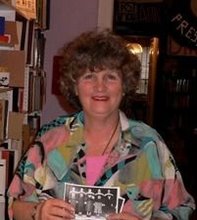
Before I pick up other threads--the remains of the prison colony on Sarah Island, the chronicling of my own Jewish despair and anger at the state of the world, the travails of an aging fem queer self--I return to some images of my life here, at 4 Fitzgibbon Avenue in West Brunswick. I read myself to bed these nights with Dicken's "Barnaby Rudge," a novel of his later years, I thought only to discover this not so, published as it was in 1841--it is I who desire to see how an imagination ages and find I love the man more and more as I age. I am already ten years older then Dickens was when he collapsed and died after a dinner in his family home--but how vacant those years seem for me in some creative sense as I read of Grip's tenacious hold on Barnaby's playful self, of the warmth of the Maypole Inn's common room, of Dicken's vast view of London both alive in his own time and the past dark streets of a city growing into its self a hundred years earlier. Never has a fire shown so bright on the page, the wind howled so forlornly outside the frosted windows, yes, the glow of sentiment and moral vision, all the holy fools of Shakespeare are here, and hollow worlds of human vanity and vital richness es of earthly beauty--even more special as I hold the compact Oxford Illustrated Dickens edition in my hands, late into the night, with its yellow illustrated cover, I am close to Naomi who back in New York City, my other London, took this book off the top shelf of the book case close to the door, plucked it from the row of the other Dickens in this series and put it into my hands. A plump, solid moment, these bound words from her hands into mine. Now that winter is approaching here, back in Melbourne, I sometimes light the fire in our small hearth in the study, Cello stretches out in front of the warming blaze and I read my Dickens with all the howls of weather and the human heart in this little space between the fire and my chair. I am so grateful to the imagination of this gifted hard working man, to all who have put words into my hands, living things that dance with the glory of our so vast, so frail human possibilities. My comforts in this world of our horrors--the guns that spit death, the bombs that birth hundreds of other killing bits, the marches and the flags and uniforms of humanity lost.
Last night such pleasures. Daniel and Joel, two young friends, joined us for dinner. Daniel and I had been working for some hours on our book project, "Archiving Pleasures: An International History of the Founding and the Future of Lesbian and Gay Archives," in this same study with another fire warming the room. Then as night fell, La Professora returned from work and Joel was called from his academic toil and we set out for Moony Ponds, a neighborhood, as we would say in New York, made famous by Dame Edith, the created "woman" of Barry Humphrey as her home town and the one from which Humphrey had to flee in real life. Four queers in Fifi, our old Honda, tootling down Dawson Street in search of somewhere to eat on this the evening of The Queens Birthday, a national holiday here. In five minutes, Dawson street turns into Puckle street and we are in Moony Ponds--and Dickens is dancing in my head. We find the only restaurant still open, a small Vietnamese family place and talk and eat and talk for a few hours-- in a small place in a small suburp--and then back to Brunswick and Lygon street to a still open Italian pastry shop where La Professora tells us her plans to bake a trifle for Joel to celebrate his Ph.D. Good talk, good friends, all knowing uncertainties, but laughing and kind with Joel even given in to my request for a bit of French, his loved language--by reciting a poem by Sartre. We pile back into Fifi and head back home. Later in the night, as I lay with Dickens resting on my belly--I remember Daniel's words almost whispered into my ear ,as we sat looking at the photographs he had taken of New York just two weeks before when he visited for the first time--he had gone to my old home, 215 on 92nd and taken images for me, Hector, Maria, the postwoman, all who had remembered and as I sat in the darkness with him with only the light from the computer screen in front of us and the dying light of the fire behind us, he whispered, don't worry, Joanie, we will get back there. How like Barnaby and his pal, Grip, a smart bird who never left the side of the "fantastic, half-crazed youth," as Dickens described him. Kindness and promises not to be kept but to be commemorated.
Tuesday, June 10, 2008

Wednesday, June 4, 2008

Rivers of Loss, Rivers of Resistance
Like the river that carried us along thick shores and past histories, the events of my own time move much faster then I am able to. I have not been feeling well, my thoughts are slow but I can see the shimmer of events that I can no longer hold on to. Stories spill over into each other, and I cannot finish tellings before the shores have become distant clouds.

I receive an e-mail from Lepa sharing with me the terrible news about the joint suicides of two Indian lesbian women: "According to a letter drafted by several Delhi-based activist groups, which would be circulated among progressive and like-minded people across Tamil Nadu, eight lesbian suicides have taken place in the state from the beginning of 2008 alone. In Kerala, in the past ten years, more then 35 lesbian couples are said to have killed themselves." What are these electronic pathways for--that at the end of my life I have been lucky enough to be able to travel--to tell you of lives and histories that must be known in the fragile ways we can grasp on our human lives. "Christy Jayanthi Malar (38) and Rukmani (40) set themselves ablaze after their families took objection to their 'unnatural relationship.' It has been reported that the two women had suffered years of torment from their families who objected to the closeness of the couple. Although being in a relationship since their school days, the women both had husbands...The alarm was raised when smoke was seen coming from Mrs Malar's home. When neighbors went in they found the bodies of the two women held in an embrace." (http://www.pinknews.co.uk/) Lepa's letter did not stop here, and this is what I have seen so often in our history, in the history of others deemed not completely worthy of full life--acts of resistance quickly follow if possible: from the Times of India "It was an unusual get-together for Chennai, and more radical was the agenda that rolled out. A group of activists, including women who celebrate alternative sexuality, on Saturday decided to start a counselling-cum-support centre for lesbians in the state. 'The decision to set up such a centre was born out of a need to reach out to lesbians here and prevent their isolation," said A Ponni, a researcher in the Bangalore-based, Alternative Law Forum. Amidst growing concern for Tamil Nadu's lesbians, activists came together in Chennai for the first time to protest against Sec 377 of the Indian Penal Code (carnal intercourse against the order of nature)--the letter by 'Voices against Sec 377' and other NGOs pointed out that 'repression of same-sex desire is not just a case of imposing one kind of desire and lifestyle on everyone, but is one that often paves the path to a question of life or death. The groups urged the state government to 'acknowledge the reality of this repression and provide the space for every human being to uphold their right to live and love with freedom..." Before I could continue with any other telling, I had to tell this story, say the names of the two women who could not survive the cruelty visited upon them and the names of those who will struggle to change death into life, the name Sudha Ramalingham, the activist lawyer who told the meeting she would be part of an advocacy group to fight for changes in the law. The river is still running under my feet, leading me to the ruins of the penal colony on Sarah Island and the shouts of victory for Obama lift the clouds and my own body falters and the soil of Mars is touched not gently for the first time, perhaps, by our creations , and the students of Gaza are given back their scholarships by a state, a people that so prizes education, and perhaps this is the only way I can tell stories from now on and part of the story is how grateful I am to you all, those in the past who found my books or who sat in a darkened room as I clicked the slides into light, telling you of lives of desire twenty, thirty years ago and those who read these words, a struggling journey, and to the women in Israel who have translated a selection of my writings into Hebrew--I have been given words and so this I give to you.
Saturday, May 24, 2008

Sarah Island --2 and More
La Professora calls me from the early stages of her return journey from the small Basque town in the Pyrenees; I am coming, darling. But a long grueling passage awaits her, economy class to economy class, no bed in sight for over 45 hours--to Bilbao, then Madrid, then London, then Hong Kong, then Melbourne. How many more of these trips she has left in her we do not know, but this is what it means to leave from or arrive to this continent--when Europe beckons. Journeys are on my mind as I resume my writing of our passage up the Lyell Highway, the map of Tasmania at my elbow--the yellow of towns giving way to the green of the Franklin-Gordon Wild Rivers National Park, our destination. I have been reading "The Sarah Island Conspiracies: Being An Account of Twelve Voyages to MacQuarie Harbor and Sarah Island, 1822-1838," based on the archival account of a clerk known only as G.K. There we sat in our cosy rented car, transversing the heart of Tasmania, riding the ridge of all those other journeys, the unwanted ones forced upon desolate people and those who would be their prison masters. Van Diemen's Land where the punished were sent for deeper despair, where nations of indigenous peoples were massacred to make room for new suffering. Surely the huge monoliths of race and class are the bedrock of this nation.
Tired and stiff after four hours of driving, we were anxious to reach our destination, an accommodation in Strahan, fronting the Macquarie Harbor, but another terrain awaited us, another circle of Hell is how I think of it now--Queenstown, a town set in a valley of mining-stripped hills. Smoke drifted up the valley from the old corrugated iron worker's homes, the poverty that remains when wealth is stripped out of a land and sent elsewhere and to others. We descended through the mountain's brutal vacancies to the town itself, trying to transform its ugliness into tough quaintness--with a pastel painted abandoned train station serving as a cafe and tourist center for the stream engine ride from Queenstown to Strahan and back again. I realize I am a foreigner in this land, a land whose booming economy today rests on what can be hauled up from its depths--the iron ore, the copper, the tin, the uranium--the booming jobs and driving house-size wheels of the Kimberley region, plunging deeper and deeper into the interior that is our earth, to feed the hungers of development--too easy to say China and India--for such takings from the land have fueled us all, the seizing of minerals and the seizing of human flesh. Queenstown is a land of old wounds, of tree covered mountains turned inside out so stone greets the day. I have no ingrained appreciation for the mighty human feat of mateship that brought about this inversion, a feat that brings national pride to many--the conquering of the earth's privacy. I keep thinking of the Aboriginals' belief that the land is sacred, like so many indigenous peoples, that as it suffers so do we all and so for the most part, they live in poverty while this land that they tended for thousands of years is turned into a wealth that never reaches their townships and leaves the hills bare.
What I want to tell you about is the deep dark waters of the Gordon River, its impenetrable bush growing down to its shores, the river of platypuses and Huon Pine, the indestructible tree that called to the shipbuilders to bring their convict labor through Hells Gates. And I will but first I must leave this narrative for another. As we were waiting in the Hobart airport for our return flight, I checked my e-mail and found the New York Times announcement that R. R. Knudson had died. Zan, of the golden hair and lithe body, of the restless spirit and total dedication to her poet partner of so many years, May Swenson, had left this earth. How could this be, the poet and the tiger now both lost. The tiger was to be the care taker of the poet's work and she had done such a good job already, editing collections of May's work, always seeking out new venues for the poet's voice. I thought of my own tiger, Lee, who had introduced me to May's work and then to Zan in the flesh. Zan coming in the silence of early dawn in her red ramshackle van to get us up out of our warm Catskill mountain beds to take us bird watching, whether we so desired it or not, her fist pounding on the door, come on, come on. She and Lee sitting in the front of the moving cabin, their mutual physicality a laughing bond while I rolled around in the back trying to stay on the make shift bed, the only seat possible. Like a teenage boy, I thought but this "boy" was the muse of the poet and her own as well, having written over 40 books for adolescent girls, mostly about sports. At one point after hours of driving along meadows and jumping out to catch a glimpse of the singer of some subtle song, Lee and Zan fell into a deep discussion of whether road kill could count on the life list of a dedicated bird watcher. I had never met the poet but I had met the tiger and when Lee read to me in her Texas-Kansas twang, May's poem "Poet to Tiger," the words caught at my heart, this butch-fem ode of appreciation from such a great height such domestic encounters of desire and play.
"...Tiger don't scold me
don't make me comb my hair outdoors.
Cuff me careful. Lick don't
crunch. Make last what's yours." (May Swenson, "New and Selected Things Taking Place," 1954)
"Make last what's yours," and we could not. How can it be that the tiger slipped away, in her furtive and yet energetic way, she who kept so alive the word of her poet for the rest of us--perhaps I have been alone too much these days, but this loss cuts so close, for this bond to be broken, for play to turn into disappearance, for such a promise one to the other made with living words and bounding flesh to be so broken--there in the cold newsprint of the so worldly NY Times in an airport on the other side of the world--but I can still smell the tiger and hear the poet laugh. The poems--read the poems-- and all will come alive again.
Tired and stiff after four hours of driving, we were anxious to reach our destination, an accommodation in Strahan, fronting the Macquarie Harbor, but another terrain awaited us, another circle of Hell is how I think of it now--Queenstown, a town set in a valley of mining-stripped hills. Smoke drifted up the valley from the old corrugated iron worker's homes, the poverty that remains when wealth is stripped out of a land and sent elsewhere and to others. We descended through the mountain's brutal vacancies to the town itself, trying to transform its ugliness into tough quaintness--with a pastel painted abandoned train station serving as a cafe and tourist center for the stream engine ride from Queenstown to Strahan and back again. I realize I am a foreigner in this land, a land whose booming economy today rests on what can be hauled up from its depths--the iron ore, the copper, the tin, the uranium--the booming jobs and driving house-size wheels of the Kimberley region, plunging deeper and deeper into the interior that is our earth, to feed the hungers of development--too easy to say China and India--for such takings from the land have fueled us all, the seizing of minerals and the seizing of human flesh. Queenstown is a land of old wounds, of tree covered mountains turned inside out so stone greets the day. I have no ingrained appreciation for the mighty human feat of mateship that brought about this inversion, a feat that brings national pride to many--the conquering of the earth's privacy. I keep thinking of the Aboriginals' belief that the land is sacred, like so many indigenous peoples, that as it suffers so do we all and so for the most part, they live in poverty while this land that they tended for thousands of years is turned into a wealth that never reaches their townships and leaves the hills bare.
What I want to tell you about is the deep dark waters of the Gordon River, its impenetrable bush growing down to its shores, the river of platypuses and Huon Pine, the indestructible tree that called to the shipbuilders to bring their convict labor through Hells Gates. And I will but first I must leave this narrative for another. As we were waiting in the Hobart airport for our return flight, I checked my e-mail and found the New York Times announcement that R. R. Knudson had died. Zan, of the golden hair and lithe body, of the restless spirit and total dedication to her poet partner of so many years, May Swenson, had left this earth. How could this be, the poet and the tiger now both lost. The tiger was to be the care taker of the poet's work and she had done such a good job already, editing collections of May's work, always seeking out new venues for the poet's voice. I thought of my own tiger, Lee, who had introduced me to May's work and then to Zan in the flesh. Zan coming in the silence of early dawn in her red ramshackle van to get us up out of our warm Catskill mountain beds to take us bird watching, whether we so desired it or not, her fist pounding on the door, come on, come on. She and Lee sitting in the front of the moving cabin, their mutual physicality a laughing bond while I rolled around in the back trying to stay on the make shift bed, the only seat possible. Like a teenage boy, I thought but this "boy" was the muse of the poet and her own as well, having written over 40 books for adolescent girls, mostly about sports. At one point after hours of driving along meadows and jumping out to catch a glimpse of the singer of some subtle song, Lee and Zan fell into a deep discussion of whether road kill could count on the life list of a dedicated bird watcher. I had never met the poet but I had met the tiger and when Lee read to me in her Texas-Kansas twang, May's poem "Poet to Tiger," the words caught at my heart, this butch-fem ode of appreciation from such a great height such domestic encounters of desire and play.
"...Tiger don't scold me
don't make me comb my hair outdoors.
Cuff me careful. Lick don't
crunch. Make last what's yours." (May Swenson, "New and Selected Things Taking Place," 1954)
"Make last what's yours," and we could not. How can it be that the tiger slipped away, in her furtive and yet energetic way, she who kept so alive the word of her poet for the rest of us--perhaps I have been alone too much these days, but this loss cuts so close, for this bond to be broken, for play to turn into disappearance, for such a promise one to the other made with living words and bounding flesh to be so broken--there in the cold newsprint of the so worldly NY Times in an airport on the other side of the world--but I can still smell the tiger and hear the poet laugh. The poems--read the poems-- and all will come alive again.
Monday, May 19, 2008


Sarah Island--Part 1
Here I always have new terrain, both physical and historical. For my 68th birthday and before her departure for 12 days in the Basque country of Spain, La Professora and two friends arranged a three day journey to the Macquarie Harbor region of Tasmania. We dropped Cello off the night before at Jane and Ann's where his skippergee family lives and at 5 the next morning were making our way to the airport for the hour flight to Hobart, the capital of Tasmania, Australia's island state. Departures and arrivals always seem to happen in the dark of night or the softer darkness of early morning here, whether one is leaving for an hour or twenty-one hour flight. Adventure in mere movement marks this continent.
Tasmania or Van Diemens Land as it was known in the penal colony history of this land is a place of dark stories --violence marks its early days--whether the victims be Aboriginal peoples or the men, women and children of London's overcrowded ship prisons shipped as raw colonial material to the Southern hemisphere. Steal a handkerchief and Van Diemens Land becomes your prison. I knew this island was the best and worst of Australia's complex past--with the Mainlanders speaking of its inhabitants the way Manhattanites often spoke of New Jersey. If my 1999 journey to the center of Australia, to the red sacred monolith of Uluru, and the dry river bed of Alice Springs, had let me touch for a brief instant, the Aboriginal homelands of the interior desert, this journey through Hells Gates of Macquarie Harbor and our visit to the stone remnants of the penal colony of Sarah Island was to bring home to me the charged national stories of a country built on the lives of social outcasts, so harshly punished for small acts of thievery and in some instances, political resistances.
Unlike the mainland, Tasmania is a land marked by internal waterways. Our plane flies low over the mouth of the Derwent River into the bay where Hobart sits, with its pretty little bay side cottages and cleaned up fishing docks. Mitch and Rose drive us up and down the narrow streets that all seem to lead to a view of the harbor and I am reminded of small New England fishing towns, that I visited with other lovers in the 70s and 80s. Like for them, tourism now understands the appeal of the 19th century preserved housing and the need for small warm coffee shops and stores selling homegrown wool and watercolors of the Tasmanian river scapes. Then it is on our way, along the Derwent river valley highway, the sunlight beaming off the river, gold reflecting gold as the autumnal colors are mirrored in the parallel waterway. The coastal town of Strahan is our destination, but first, three hours later, we must pass through the mining moonscape of Queenstown. This is a place that scorned prettiness.
Tasmania or Van Diemens Land as it was known in the penal colony history of this land is a place of dark stories --violence marks its early days--whether the victims be Aboriginal peoples or the men, women and children of London's overcrowded ship prisons shipped as raw colonial material to the Southern hemisphere. Steal a handkerchief and Van Diemens Land becomes your prison. I knew this island was the best and worst of Australia's complex past--with the Mainlanders speaking of its inhabitants the way Manhattanites often spoke of New Jersey. If my 1999 journey to the center of Australia, to the red sacred monolith of Uluru, and the dry river bed of Alice Springs, had let me touch for a brief instant, the Aboriginal homelands of the interior desert, this journey through Hells Gates of Macquarie Harbor and our visit to the stone remnants of the penal colony of Sarah Island was to bring home to me the charged national stories of a country built on the lives of social outcasts, so harshly punished for small acts of thievery and in some instances, political resistances.
Unlike the mainland, Tasmania is a land marked by internal waterways. Our plane flies low over the mouth of the Derwent River into the bay where Hobart sits, with its pretty little bay side cottages and cleaned up fishing docks. Mitch and Rose drive us up and down the narrow streets that all seem to lead to a view of the harbor and I am reminded of small New England fishing towns, that I visited with other lovers in the 70s and 80s. Like for them, tourism now understands the appeal of the 19th century preserved housing and the need for small warm coffee shops and stores selling homegrown wool and watercolors of the Tasmanian river scapes. Then it is on our way, along the Derwent river valley highway, the sunlight beaming off the river, gold reflecting gold as the autumnal colors are mirrored in the parallel waterway. The coastal town of Strahan is our destination, but first, three hours later, we must pass through the mining moonscape of Queenstown. This is a place that scorned prettiness.
Subscribe to:
Posts (Atom)