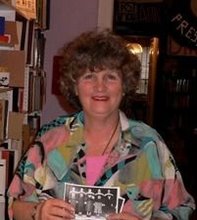
La Professora is somewhere on a road to Goa, her hennaed head hanging low by now, I would think. But soon after a good night's sleep, she will sparkle with her passion for international discourse.
My recent dear authors, continued. Guy Gavriel Kay and his 1990 "fantasy" novel, "Tigana," a story about a struggle over memory and sad, revengeful power that cannot sustain its own immense power. A created world that is always vaguely familiar, medieval, colonial, and one that is suffused with erotic yearnings of all kinds, with a gentleness in the midst of callous abuse of power. A father using his dwindling magic to save his prancing and strong hearted son, who so loved his early stable boy lover, from terrible torture for his perversions. In his afterward, Kay speaks of the resonances in our near history that gave him the outline for the emotional tensions of his Peninsula of the Palm: " The novelist Milan Kundera fed my emerging theme of oppression and survival with his musings about the relationship between conquered peoples and an unstable sexuality: what I have called 'the insurrections of night.' The underlying ideas, for me, had to do with how people rebel when they can't rebel, ...how shattered self-respect can ripple through to the most intimate levels of our lives."
Sometimes when I write these words to you in this space, I want to apologize that I am not writing about the "insurrections of the night," at least in the way I have in so much of my work--the yearning of a fem lesbian body moving through the second half of the 20th century, but as my fingers curve to the keys, as the darkness of a Southern hemisphere night falls around me, I touch with every thought I mark on this new kind of page, I offer myself as I so often did, finding the wonder of life in the lifting of my hips, words to lips.
Saturday, December 8, 2007

Friday, December 7, 2007
Again, so much I want to say to you. Even the choice made where to begin tells a story--pushing at my head is the image of Romney, manicured and politically handsome, telling us that America is the land of the believers, that religion is the now spoken badge of American identity--at a time of war, where deaths pile up at our door--but they have been doing this for such a long time--the assassination of Allende, the non-believer, always pulls at me--Right wing politicians are pushing God to the center of their real politick, how the righteous thrive in killing times. I listened to an excerpt of Romney's speech on the weekly program that carries me over the seas back to America--the Lehrer Report--and the conversation about it afterwards. Then I read Brooks' column, trying to pull of his peculiar balance of quoting authorities, fear of radicals, half ashamed, a little ashamed, of the world he is helping to build, one marked by economic, cultural, class, gender safety for his kind. How quickly we are moving to demonize our own non-believers--from Charles O'Reilly's rantings about the dark forces of secularism to the white house. Of course, I am a queer, old lesbian non-religious socialist Jew so what do I know--be careful, oh people of America, of how you draw your circles of who is human and who is not--we know many of you have already decided the alien, the worker without papers but with strong arms to do your work, is already beyond the pale. Oh Whitman, poet of the ever widening glory of American human possibility, as you nursed the dying soldiers and kissed the tram conductor, how narrow, how unlovely we are becoming--never were pagans needed as much. What god is this that appears on money and in the cavernous public mouths of power seeking men--it is in the quiet places I thought you were found and whatever kisses one chose to send your way,
were the gifts of private small selves--you better run, Mr God, if you don't want a whole nation saying you made them do it, the torture, the neglect, the selfishness, the greed, the lying, the waste, oh the waste--I, a non believer, worry for you.
But you see, I did not want to begin my day with you this way--it just feels as if so much is slipping away so fast and well meaning people are just slightly turning their heads away--perhaps it is only me that is slipping away and you will be stronger and clearer. I had a day of terrible pain yesterday and night, pain of the body, and I am less a body for it. I have used Emily Dickinson's poem, "After great pain, a formal feeling comes" in one of my earlier pieces, but I think what I am learning now is the aftermath of great pain, the shaken smaller body that fears the next visit. This is just to tell you of deeper day.
Last night at 1 in the morning, La Professora left for Goa, India, to give a paper at a conference. So often our relationship has been this way; I catch her between nations and this is her joy. Oh darling, we spoke last on Singapore lines and now you will find me here when you reach India. My day started early--5:30 am, the three dogs stretching their Skippergee bodies to greet me and get their day's rations. Because of drought conditions, we can only water gardens twice a week in the early morning so I began the rounds, a short woman in her nightgown in the dawn of a mild early summer day. As I walked down the right side of the house where the orange tree is and the fern trees, Anna called out to me, thinking I was you--"Buongiorno, Dianna, como esta?"
"Buongiorna, Anna, it is me Joan, Di is in India." A pause and over the old wood fence, I see the top of her broom knocking down spider webs, "Good morning, Joan--I am here, if you need anything I am here."
Grazie, Anna, thank you.
I walk to the shops to buy bird seed for our visiting wild parrots and a chicken for my soup; on the way home, I pause to cross the street and a tall old woman in a blue jumper and white skirt, with a graying little shepherd mix, a rescue dog, I find out, called Gemina, begins to talk with me. The streets are empty, as they often are and the morning air is fresh. The bird seed gets her going and then she tells me she will be 90 years old in January and she was born on Fitzgibbon Avenue all those years ago. "I don't believe in this multiculturalism," she looks down at me and says, her tongue moving between her only two front teeth. "In my day the Scandanavians lived over there," and she points up the street, and "the Germans lived over there, that's my family, high German"--she points down the street--"but we were Australians, this new lot, they never want to fit it in but they sure do want everything else." I know from my own limited knowledge of West Brunswick's history that this new lot, the Italians, the Lebanese and the Vietnamese have been living here for over 40 years. I try to convince her that change is a good thing--"what is your name?" Joan. And yours, "Wyn." I wonder how after the bird seed the very first thing she needed to say to someone on this morning was her dislike of the old change in her neighborhood. She goes on speaking to me for a half hour, about her life as a public servant, about her mother's friendship with Emily Pankhurst back in Manchester. The years stretch out behind her, almost a century--at pauses, I suggest she should make a tape with the Brunswick Historical Society--"my niece says that too, but I would fight with them." Then she introduces me to her dog who is growing impatient--saved her, no one else wanted her, she is the nervous type."
My bags are growing heavy and I still have Anna's words in my ears, Anna, who came as a migrant 45 years ago and worked in textile factories most of all those years, Anna who shows me the old photos of her mother left in Calabria so many years ago and holds her hand over her heart and say, "Joan--in that special way she says my name--"I am so sad sometimes, so sad, " Anna who gives me her precious words, "I am here, I am here."
To close, I love Lorena Ochoa as much as I do Tiger Woods.
Welcome to a new country, my love and light a candle for our elephant protector.
were the gifts of private small selves--you better run, Mr God, if you don't want a whole nation saying you made them do it, the torture, the neglect, the selfishness, the greed, the lying, the waste, oh the waste--I, a non believer, worry for you.
But you see, I did not want to begin my day with you this way--it just feels as if so much is slipping away so fast and well meaning people are just slightly turning their heads away--perhaps it is only me that is slipping away and you will be stronger and clearer. I had a day of terrible pain yesterday and night, pain of the body, and I am less a body for it. I have used Emily Dickinson's poem, "After great pain, a formal feeling comes" in one of my earlier pieces, but I think what I am learning now is the aftermath of great pain, the shaken smaller body that fears the next visit. This is just to tell you of deeper day.
Last night at 1 in the morning, La Professora left for Goa, India, to give a paper at a conference. So often our relationship has been this way; I catch her between nations and this is her joy. Oh darling, we spoke last on Singapore lines and now you will find me here when you reach India. My day started early--5:30 am, the three dogs stretching their Skippergee bodies to greet me and get their day's rations. Because of drought conditions, we can only water gardens twice a week in the early morning so I began the rounds, a short woman in her nightgown in the dawn of a mild early summer day. As I walked down the right side of the house where the orange tree is and the fern trees, Anna called out to me, thinking I was you--"Buongiorno, Dianna, como esta?"
"Buongiorna, Anna, it is me Joan, Di is in India." A pause and over the old wood fence, I see the top of her broom knocking down spider webs, "Good morning, Joan--I am here, if you need anything I am here."
Grazie, Anna, thank you.
I walk to the shops to buy bird seed for our visiting wild parrots and a chicken for my soup; on the way home, I pause to cross the street and a tall old woman in a blue jumper and white skirt, with a graying little shepherd mix, a rescue dog, I find out, called Gemina, begins to talk with me. The streets are empty, as they often are and the morning air is fresh. The bird seed gets her going and then she tells me she will be 90 years old in January and she was born on Fitzgibbon Avenue all those years ago. "I don't believe in this multiculturalism," she looks down at me and says, her tongue moving between her only two front teeth. "In my day the Scandanavians lived over there," and she points up the street, and "the Germans lived over there, that's my family, high German"--she points down the street--"but we were Australians, this new lot, they never want to fit it in but they sure do want everything else." I know from my own limited knowledge of West Brunswick's history that this new lot, the Italians, the Lebanese and the Vietnamese have been living here for over 40 years. I try to convince her that change is a good thing--"what is your name?" Joan. And yours, "Wyn." I wonder how after the bird seed the very first thing she needed to say to someone on this morning was her dislike of the old change in her neighborhood. She goes on speaking to me for a half hour, about her life as a public servant, about her mother's friendship with Emily Pankhurst back in Manchester. The years stretch out behind her, almost a century--at pauses, I suggest she should make a tape with the Brunswick Historical Society--"my niece says that too, but I would fight with them." Then she introduces me to her dog who is growing impatient--saved her, no one else wanted her, she is the nervous type."
My bags are growing heavy and I still have Anna's words in my ears, Anna, who came as a migrant 45 years ago and worked in textile factories most of all those years, Anna who shows me the old photos of her mother left in Calabria so many years ago and holds her hand over her heart and say, "Joan--in that special way she says my name--"I am so sad sometimes, so sad, " Anna who gives me her precious words, "I am here, I am here."
To close, I love Lorena Ochoa as much as I do Tiger Woods.
Welcome to a new country, my love and light a candle for our elephant protector.
Wednesday, December 5, 2007
Thank you, V. Kingsley and I will write LHA about your request--you know we have a vast collection of t-shirts as well at the archives--these moments of cloth worn close to our bodies, announcing our agendas, our dreams, our vanities, our certainties, our affiliations, our victories, our desires, our refusals and our yes's literally speak to the future. If you want, write to me from my website with your e-mail address and we can speak at greater length.
And Seth, newly of Riverdale, welcome to my home, dear man. I always carry images of you with me and of your father as well--in suit and liberation tie and so much more. Love to you.
You know, dear friends, syntax is all and should not be rushed as I do so much of the time. When I read over my discussion of the books I had been reading, I realized I had constructed a careless sentence that made it seem as John le Carre was one of those who used an African setting cheaply and that is not what I meant at all. I have just finished reading his "The Mission Song," and discovered that this writer I had thought was a cold war romanticizer, had great anger at and skepticism for the marriage of the profit motive and political-cultural adventurism. This novel has at its heart a hybrid young man of Irish-Congolese background who while offering his services as a translator is educated in the ruthlessness of power, both African and European. I think of all the shrieking fanatics--and here is a writer showing the rich humanity of cultural uncertainties. Like Mankell, Le Carre lets us hear the screams of the tortured and shows us the calculated moral vacuum that employs such a technique to get its answers. Bruno Salvador carries many histories with him, on his tongue, on his skin, as he looses his innocence but holds on to his humanity. Once again, like a bad ghost the voice of O'Reilly from Fox propaganda floats into my head--sometimes I watch because I cannot really believe what I am hearing and even more difficult, that this channel is the most popular "news" media in the United States. Yesterday, he was ranting on how he has saved Christmas from the "dark side," from the evil secularists. In America in 2007--and then in the same day, I read these words, "Tom," Mrs. Comer said she asked, "am I getting fired over evolution?" (NY Times, "Official Leaves Post as Texas Prepares to Debate Science Education Standards") and finally, I hear about a Republican candidate, Huckabee, who is gaining popularity, launching a TV add with the words, "A Christian leader." America in 2007. And I see this country where I was born fading from the world stage--a good thing if it inspires humility and a sense of connection to other world views--but I fear, it will not. When I think why do things seems so much worse this time around, it is the Fox propaganda channel that comes to mind--back in 40s, the radio bigot-"patriots" who spouted hatred for so many were ultimately laughed off the national airwaves and McCarthy was revealed in all his spiteful mad littleness--but now we have a so-called news channel that speaks of the dark side, of the evil ones. And we fear fanatic Muslims? Think they are foreign in their world view?
"Tom," Ms. Comer said she asked him, "am I getting fired over evolution?"
And Seth, newly of Riverdale, welcome to my home, dear man. I always carry images of you with me and of your father as well--in suit and liberation tie and so much more. Love to you.
You know, dear friends, syntax is all and should not be rushed as I do so much of the time. When I read over my discussion of the books I had been reading, I realized I had constructed a careless sentence that made it seem as John le Carre was one of those who used an African setting cheaply and that is not what I meant at all. I have just finished reading his "The Mission Song," and discovered that this writer I had thought was a cold war romanticizer, had great anger at and skepticism for the marriage of the profit motive and political-cultural adventurism. This novel has at its heart a hybrid young man of Irish-Congolese background who while offering his services as a translator is educated in the ruthlessness of power, both African and European. I think of all the shrieking fanatics--and here is a writer showing the rich humanity of cultural uncertainties. Like Mankell, Le Carre lets us hear the screams of the tortured and shows us the calculated moral vacuum that employs such a technique to get its answers. Bruno Salvador carries many histories with him, on his tongue, on his skin, as he looses his innocence but holds on to his humanity. Once again, like a bad ghost the voice of O'Reilly from Fox propaganda floats into my head--sometimes I watch because I cannot really believe what I am hearing and even more difficult, that this channel is the most popular "news" media in the United States. Yesterday, he was ranting on how he has saved Christmas from the "dark side," from the evil secularists. In America in 2007--and then in the same day, I read these words, "Tom," Mrs. Comer said she asked, "am I getting fired over evolution?" (NY Times, "Official Leaves Post as Texas Prepares to Debate Science Education Standards") and finally, I hear about a Republican candidate, Huckabee, who is gaining popularity, launching a TV add with the words, "A Christian leader." America in 2007. And I see this country where I was born fading from the world stage--a good thing if it inspires humility and a sense of connection to other world views--but I fear, it will not. When I think why do things seems so much worse this time around, it is the Fox propaganda channel that comes to mind--back in 40s, the radio bigot-"patriots" who spouted hatred for so many were ultimately laughed off the national airwaves and McCarthy was revealed in all his spiteful mad littleness--but now we have a so-called news channel that speaks of the dark side, of the evil ones. And we fear fanatic Muslims? Think they are foreign in their world view?
"Tom," Ms. Comer said she asked him, "am I getting fired over evolution?"
Monday, December 3, 2007
A rare day here, a day after a drenching rain so the air has that cleansed shine, the light here is always a wonder, its mix of desert clarity and then skies with cloud scapes of layered reds, purples, and even at times rainless rich grays and then those high summer days, when you are sheltering from cold winds and frozen hail, and the skies here are a mono shattering blue that is merciless in its reflection of heat. A high cloud appears as a brave or lost traveler trying desperately to find its kin. I join so many elderly emigrees who while overwhelmed by all they have left behind, by all the uncertainties of aging bodies and not quite as sharp minds take great delight in focusing on the huge daily changes of live on earth, the sky, the weather, the nature of the wind. Perhaps we have been defeated by the vagaries of smaller life--too high rents, shrinking income and gums, friends too much ocean away--but the sky with its constant messages refuses to loose sight of us.
And my other constant private companions, books. You who have read my other words know how Zola sat with me as the bags of yellow poison known as chemotherapy dripped into aching veins, know how the sounds of Patrick O'Brien's straining clipper ships and revolutionary naturalists and salt of the earth British sea captains reached me way beyond the grinding fatigue of radiation. From my early days in the Bronx to these much later days in West Brunswick, once called the Bronx of Melbourne because it was such a down but not out neighborhood, books, the hard handable caught in amber moments of human heart and mind, pushed me out of dead ends into Joan's possibilities --I hope I have repayed in a very small way those other writers from every culture and every time in every language that endured the loneliness and self doubt of creation and to all my students in Queens College SEEK through the mid 60s until the 90s, it was this highway of teeming visions--both yours to visit and to create--that I tried so hard to lay at your feet.
My authors who sit beside me now--Chimamanda Ngozi Adichie's novel "Half of a Yellow Sun," her novel of the killing time in Nigeria in the 1960s, told through characters that span the worlds of witnesses and victims, history marked on bodies with desire, women's voices not reduced in either their longings or their outrage. Years ago with those same students I have mentioned we read together Chinua Achebe's Things Fall Apart and then Bessie Head and Echemeta--it is time now for us to see the varied history of the nations of Africa through their own creative visions, another kind of Africa. As Adichie quotes these lines of Achebe: "Today I see it all-/Dry, wire-thin in sun and dust of the dry months-/Headstone on tiny debris of passionate courage." ( from "Mango Seedling" in Christmas in Biafra and Other Poems)
Henning Mankell's "Kennedy's Brain," Mankell is a Swedish born novelist who is most known, I think, for his compelling detective series with Inspector Wallender and the cold often silent world with touches of burning hearts through which his characters enter our line of vision and whose every book of whatever genre I will always seek out--Mankell has for several years run a theater company in Mozambique where he was living last I read of his life. Here through the voice and journey of a Swedish mother whose son has disappeared in Mozambique, Mankell has created a "thriller" as the copy says that is also his expression of fury at the cynical reductions of African lives by those who profit from human suffering in so many ways--like John LeCarre--even worldly men are fed up with the callousness of unleashed profit motive. As he writes on the closing page of his afterward to this novel, "What is written in this book is exclusively the result of my own choices and decisions, of course. Just as the anger is also mine, the anger that was my driving force." How close I feel to this man, how warmed by his anger I am, this writer who moves from harbors encased in fog and ice to a glaring sun much like the one I know here--bringing unflagging interest in how people move through the hardness of unexplainable actions on one hand or how they survive manipulated human coldness on the other.
I must walk now my poor Cello who is suffering from a spider bite. More another day and night.
And my other constant private companions, books. You who have read my other words know how Zola sat with me as the bags of yellow poison known as chemotherapy dripped into aching veins, know how the sounds of Patrick O'Brien's straining clipper ships and revolutionary naturalists and salt of the earth British sea captains reached me way beyond the grinding fatigue of radiation. From my early days in the Bronx to these much later days in West Brunswick, once called the Bronx of Melbourne because it was such a down but not out neighborhood, books, the hard handable caught in amber moments of human heart and mind, pushed me out of dead ends into Joan's possibilities --I hope I have repayed in a very small way those other writers from every culture and every time in every language that endured the loneliness and self doubt of creation and to all my students in Queens College SEEK through the mid 60s until the 90s, it was this highway of teeming visions--both yours to visit and to create--that I tried so hard to lay at your feet.
My authors who sit beside me now--Chimamanda Ngozi Adichie's novel "Half of a Yellow Sun," her novel of the killing time in Nigeria in the 1960s, told through characters that span the worlds of witnesses and victims, history marked on bodies with desire, women's voices not reduced in either their longings or their outrage. Years ago with those same students I have mentioned we read together Chinua Achebe's Things Fall Apart and then Bessie Head and Echemeta--it is time now for us to see the varied history of the nations of Africa through their own creative visions, another kind of Africa. As Adichie quotes these lines of Achebe: "Today I see it all-/Dry, wire-thin in sun and dust of the dry months-/Headstone on tiny debris of passionate courage." ( from "Mango Seedling" in Christmas in Biafra and Other Poems)
Henning Mankell's "Kennedy's Brain," Mankell is a Swedish born novelist who is most known, I think, for his compelling detective series with Inspector Wallender and the cold often silent world with touches of burning hearts through which his characters enter our line of vision and whose every book of whatever genre I will always seek out--Mankell has for several years run a theater company in Mozambique where he was living last I read of his life. Here through the voice and journey of a Swedish mother whose son has disappeared in Mozambique, Mankell has created a "thriller" as the copy says that is also his expression of fury at the cynical reductions of African lives by those who profit from human suffering in so many ways--like John LeCarre--even worldly men are fed up with the callousness of unleashed profit motive. As he writes on the closing page of his afterward to this novel, "What is written in this book is exclusively the result of my own choices and decisions, of course. Just as the anger is also mine, the anger that was my driving force." How close I feel to this man, how warmed by his anger I am, this writer who moves from harbors encased in fog and ice to a glaring sun much like the one I know here--bringing unflagging interest in how people move through the hardness of unexplainable actions on one hand or how they survive manipulated human coldness on the other.
I must walk now my poor Cello who is suffering from a spider bite. More another day and night.
Sunday, December 2, 2007

Written August 22, 2007 two months after our return to Melbourne from our sojourn in Palestine-Israel:
Our trip to Israel and parts of the West Bank has plunged me into a seemingly never ending story, a history of betrayals, of wounds that can never heal on the backs of another people, of confused visions of nation states and religious fervor--for four decades, I walked the streets of the Upper West Side of New York, watching over the years the invisible highway between this strip of Broadway and Israel becoming more and more evident, and I delighted in the feel of lancemen all around me, the huge warehouses of kosher holiday foods that would spring up right before Passover with their family size boxes of matzoh and jar after jar of gefilte fish. Jewish in that New York cultural way to my bone, I always thought, but now I have seen other bones, I have seen biblical dreaming turn into national agendas of ethnic cleansing and apartheid walls and one way roads, of human beings trapped behind barbed wire fences, deprived of water, food, of medical care--urban punishment for the wrong vote. Cages are easily come by in this strip of desert, military power determining whose back will be against the wall, who will never bath without permission in the Mediterranean again.
Our trip to Israel and parts of the West Bank has plunged me into a seemingly never ending story, a history of betrayals, of wounds that can never heal on the backs of another people, of confused visions of nation states and religious fervor--for four decades, I walked the streets of the Upper West Side of New York, watching over the years the invisible highway between this strip of Broadway and Israel becoming more and more evident, and I delighted in the feel of lancemen all around me, the huge warehouses of kosher holiday foods that would spring up right before Passover with their family size boxes of matzoh and jar after jar of gefilte fish. Jewish in that New York cultural way to my bone, I always thought, but now I have seen other bones, I have seen biblical dreaming turn into national agendas of ethnic cleansing and apartheid walls and one way roads, of human beings trapped behind barbed wire fences, deprived of water, food, of medical care--urban punishment for the wrong vote. Cages are easily come by in this strip of desert, military power determining whose back will be against the wall, who will never bath without permission in the Mediterranean again.
My reading started before we left New York: Amos Oz, like an Israeli Studs Terkel, presenting the pith of his conversations with Jewish Israelis from the old days in their cafes, the author purposely seeking out the communities who most disagree with his progressive view of things, the ultra Orthodox in Northwestern Jerusalem, and I read, the words burning on the paper, of fierce convictions, some speak of their hatred for the Diasporic Jew, "the Diaspora with glass jars of cucumbers pickled in parsley and garlic on every window still, with pale flesh, stooped shoulders,"others of the Western influenced "perverts" who show the need for Orthodox purity and I stop and write down these connecting moments between my selves--the Jew, the pervert, the Diasporic--center of dislocated understandings and I remember Hannah Arendt again, with her own racial convervatisms, still trying to understand where the pariah can show light. Before we see the desert lands of Palestine-Israel, I have met the molten bodies of thinking on Oz' pages: the Judeo-Nazi speaks,"Throughout history, anyone who thought he was above killing, got killed. It's an iron clad law. Let them see we are a mad dog nation--Maybe the world will finally begin to fear me instead of feeling sorry for me. Maybe they'll start quaking in fear of my whims instead of admiring my nobility...To live without fists, fangs, claws in a world of wolves is a crime worse then murder." As Oz said, I am coming to a people caught between "Hitler and the Messiah," between history and pre-history, between shame and God's own Military, between the need for the West and the rejection of the pluralism of perverts. This the author tells me and I will learn for myself is only one reflection glinting off the desert stones--his own words, kept for the end of the book to show what a careful listener he is even though his heart is bursting, "The idea of a nation-state is a gentile's delight. I would be more then happy to live in a world composed of dozens of civilizations, each all developing in accordance to its own rhythms, all cross pollinating one another, without any one emerging as a nation state, no flag, no emblem, no passport, no anthem--only spiritual civilizations somehow tied to their land ,without the tools of statehood and the instruments of war." In short the strengths of the diaspora and the Jewish world before Hitler. And after--Oz goes on to write"Perhaps we should take smaller bites, relinquish the totality of the Land for the sake of internal and external peace. Concede heavenly Jerusalem for the sake of the Jerusalem of the slums, waive messianic salvation for the sake of the small, gradual reforms, forgo messianic fervor for the sake of prosaic sobriety. And perhaps the entirety of our story is not a story of blood and fire or of salvations and consolations but, rather, a story of the halting attempts to recover from a severe illness."
When we arrive in Haifa and I tell our friend Hannah what I have been reading in preparation for our visit, she says Oz is out of date now and not as forward thinking as I suggest. And yet, because his words were the first that opened up my first window on the turmoil of all kinds that shapes this land, I am grateful for his listening and his own telling of the story. (written on Monday, December 3, 2007 on a rainy morning in Melbourne, with thunder pealing in the distance and the much longed for sound of water flying off the wheels of cars rushing down Dawson Street and tapping, tapping on our corrugated iron roof)
August 22, 2007-- I read the words of Ben Gurion in Jacqueline Rose's book, "The Question of Zion," calling for the expusion of as many Arabs as possible from their homes, this land "will be Jewish whether the Arabs want it or not." I ask myself why did I never ask where did the people who lived in Palestine go after 1948--were they never there? Did they become dust blown over the Sinai desert? I was too young in 1948 but now I am not, I never had any formal Jewish education in my younger life, but now I can educate myself, I never received the accepted story of how it all came about from relatives or religious or community leaders--I was too busy surviving my own chaotic queer life, but now I am old and I can read and listen and travel with and to loving friends and see in my mind's eye, the over 700,000 Palestinian exiles living in their makeshift tented cities in the desert, waiting for the right to return home, which never came, waiting for the world to recognize their plight which never happened. Instead the wounds of the Holocaust tried to heal themselves around conquering Jewish armies, all was acceptable, even heroic in the name of Jewish safety--so many betrayals on which to build a nation--the double dealing of the British, the deafness of the Arab League, the false public reassurances, the private truths that called for another people's expulsion, because they were not as "civilized" as the conquering wounded army.
And always there were other Jewish voices calling for respect for the Palestinian peoples who already walked the trails between the bone clad hills, who warned that once a country is won by the gun, it will wake and sleep with terror. And here, on the streets of West Brunswick, between my Italian and Vietnamese neighbors, I sometimes long for those familiar sights of housewives shopping for Shabbas chickens and the freshly made chicken soup with matzoh balls, and I ask my German-Australian lover to take me to the small Jewish market in Baclava so I can buy a glistening bottle of Kosher pickles and packets of matzo meal while I console the shop owner, an Orthodox youngish Jewish man with his tsalis flying under his shirt about the new freezer he has just had delivered. "Did I do the right thing," he sincerely asks me, a total stranger,"it costs so much money," and I, perfectly understanding his worries, can say with all sincerity, "do not worry, I am sure it will work out fine." Such are the permissions of the Diaspora.
Wednesday, November 28, 2007
Again, thank you Mike, for taking the time to write to me. Yes, I know the work of bell hooks--she, like Edward Said, is an essential voice in our times. Glorious dissenters who fashion a body of work out of their knowledge and their heart, out of the history of their own marked bodies. They are some of the many writers targeted by the Right wing's ongoing attacks on "left-leaning" universities--but those of us who shared bell's writings with our students know the gleam she brought to their thinking, their recognition of her portrait of gender, race, culture and of her fierce self. These public university rooms, besieged by so many constrictions from so many fundamentalist desires for silence or from so little federal economic support, must always be a matter of our concern. Once in New York, we turned our back and free higher education died.
Sunday, November 25, 2007
Today I write you from a different Australia--John Howard and his sneering cohort have been converted into men again; in a strange way, by loosing this national election, they have regained their humanity. Howard is simply an aging man who lurches forward on daily walks, his assurance stripped. Overnight, the glitter of power has gone from his eyes, his wife interrupts his resignation speech with a fragile inappropriate touching of his hand, a half whisper of wanted reassurance that his use of the past tense did not include her. One political reporter summed up the Liberal party leaders, here, as people of privilege and punishment. Once there were three: the demented (Blair), the driven (Howard) and the delusional (Bush)--and now only the last remains and so does our work.
When La Professora first brought me to her shores, she would regale me with stories of how Australia used to be--a fair go, solidarity with workers, women's projects flourishing, affordable housing--lending itself to the wonderful tradition here known as shared houses--groups of active, lusty, creative young people living together, collectives each having its own reputation, its own sexual dramas, its own political banners. I laughed at my first tour of Melbourne in Di's aging car, FiFi, as Di would stop at almost every corner and say, "see that house, that is where I lived with Beth and three other names, that was the garden I started" and then two streets later, "see that corner house, that was where we lived in the 70s and I built that bench under the gum." I would peer through overgrown bushes and look into the youth of my new lover, trying hard to see the young lesbian women in their fedora hats deep in discussion about how to secure the squat for a women's refuge.
Then the Howard years, 11 and half years of free market conservatism, economic rationalism, foolish parodying of America, little by little stripping from the public face of this wide brown country so much that had softened the hardships of working people and of the citizens that struggle to live under the glow cloud of the "well-off." As the Howard years went by, all the worst characteristics of Australia's national character became social policy. Racism, a particular virulent Australian version, disfigured the government's refugee and immigration policies, prevented Howard from saying "sorry" to the first Australians who still wait for inclusion in the much vaulted wealth of this country, a wealth ripped from their lands--the gold, copper, uranium deposits hauled to the surface--China, India waiting for these riches--and Indigenous people live 25 to a tin shed, flies studding the eyes of the children so glaucoma is a young person's disease. But we have never been so rich, Howard and his ilk boasted at every dinner party for the very rich while public schools and public health and public dreams of equity went begging. Howard who lied about desperate asylum seekers on a sinking boat--they threw their own children into the ocean, we don't want these kind of people in Australia--like the lies propagated by his beloved Bush, weapons of mass destruction, any lie in the service of consolidated power, consolidated narrow nationalism. I came to understand more about the cringe shadow on the Australian psyche that Di had told me about as Howard would boast, Bush just called me, the great man spoke to me, I have my cowboy hat ready for that invitation I know will come for me and Jeannette to stay at the ranch with my buddy and Laura. Like he believed in the monarchy, Howard believed in the American empire. Lost men these are.
The night of the election we went to lesbian gathering in one of those famous houses only we were of a certain age and a couple of long standing were generously sharing their home as they often do--bottles of champagne stood ready if truly the unimaginable happened. The polls had tightened, perhaps Labour was not as far ahead as everyone had thought just a week ago and so we gathered around the tv, sharing food and worries, except for me, old time friends each one. Film makers, writers, sex educators, teachers, carers--all glued to the small band of red and blue that ran along the bottom of the ABC screen, watching slowly the count of seats falling to Labour, pushing--76 was what was needed for a victory. Pattie sitting next to me with pencil paused over The Age's guide to the electorate, ready to tick off the acquired seats. I heard words I did not know all through the night, place names that meant nothing to me, but that brought shouts of delight from my comrades--Eden-Monaro, Lindsay, Deakin, Bonner, And all night, Bennelong, the Sydney seat from which Howard's power emanated for over 30 years. I watched, a stranger, as long suffering citizens hung on every flick of the numbers chart--so much depended on this outcome for these women who had known another Australia, one that had made their dreams possible, that had shaped their young adulthood with social commitments to fuller, more compassionate national visions. And I could witness the almost exhausted shout of victory when the numbers finally gave the answer, Howard and all who fed off his arrogance were out of power.
Now I know that Rudd represents the conservative branch of the Labor party, but his deputy Prime Minister, a red head named Julia Gillyard, hails from the left reaches of the party--struggles lie ahead of course--but just when I thought the Right in this country and in my own could never be made to retreat--a little like housing costs in New York--the majority of people in this country proved me wrong--what the Bushes and the Cheneys present as destiny can be refused. Here in a time of unheard of prosperity for many, many looked beyond their own comfort and peered into what their country had become. Two down, one more to go.
When La Professora first brought me to her shores, she would regale me with stories of how Australia used to be--a fair go, solidarity with workers, women's projects flourishing, affordable housing--lending itself to the wonderful tradition here known as shared houses--groups of active, lusty, creative young people living together, collectives each having its own reputation, its own sexual dramas, its own political banners. I laughed at my first tour of Melbourne in Di's aging car, FiFi, as Di would stop at almost every corner and say, "see that house, that is where I lived with Beth and three other names, that was the garden I started" and then two streets later, "see that corner house, that was where we lived in the 70s and I built that bench under the gum." I would peer through overgrown bushes and look into the youth of my new lover, trying hard to see the young lesbian women in their fedora hats deep in discussion about how to secure the squat for a women's refuge.
Then the Howard years, 11 and half years of free market conservatism, economic rationalism, foolish parodying of America, little by little stripping from the public face of this wide brown country so much that had softened the hardships of working people and of the citizens that struggle to live under the glow cloud of the "well-off." As the Howard years went by, all the worst characteristics of Australia's national character became social policy. Racism, a particular virulent Australian version, disfigured the government's refugee and immigration policies, prevented Howard from saying "sorry" to the first Australians who still wait for inclusion in the much vaulted wealth of this country, a wealth ripped from their lands--the gold, copper, uranium deposits hauled to the surface--China, India waiting for these riches--and Indigenous people live 25 to a tin shed, flies studding the eyes of the children so glaucoma is a young person's disease. But we have never been so rich, Howard and his ilk boasted at every dinner party for the very rich while public schools and public health and public dreams of equity went begging. Howard who lied about desperate asylum seekers on a sinking boat--they threw their own children into the ocean, we don't want these kind of people in Australia--like the lies propagated by his beloved Bush, weapons of mass destruction, any lie in the service of consolidated power, consolidated narrow nationalism. I came to understand more about the cringe shadow on the Australian psyche that Di had told me about as Howard would boast, Bush just called me, the great man spoke to me, I have my cowboy hat ready for that invitation I know will come for me and Jeannette to stay at the ranch with my buddy and Laura. Like he believed in the monarchy, Howard believed in the American empire. Lost men these are.
The night of the election we went to lesbian gathering in one of those famous houses only we were of a certain age and a couple of long standing were generously sharing their home as they often do--bottles of champagne stood ready if truly the unimaginable happened. The polls had tightened, perhaps Labour was not as far ahead as everyone had thought just a week ago and so we gathered around the tv, sharing food and worries, except for me, old time friends each one. Film makers, writers, sex educators, teachers, carers--all glued to the small band of red and blue that ran along the bottom of the ABC screen, watching slowly the count of seats falling to Labour, pushing--76 was what was needed for a victory. Pattie sitting next to me with pencil paused over The Age's guide to the electorate, ready to tick off the acquired seats. I heard words I did not know all through the night, place names that meant nothing to me, but that brought shouts of delight from my comrades--Eden-Monaro, Lindsay, Deakin, Bonner, And all night, Bennelong, the Sydney seat from which Howard's power emanated for over 30 years. I watched, a stranger, as long suffering citizens hung on every flick of the numbers chart--so much depended on this outcome for these women who had known another Australia, one that had made their dreams possible, that had shaped their young adulthood with social commitments to fuller, more compassionate national visions. And I could witness the almost exhausted shout of victory when the numbers finally gave the answer, Howard and all who fed off his arrogance were out of power.
Now I know that Rudd represents the conservative branch of the Labor party, but his deputy Prime Minister, a red head named Julia Gillyard, hails from the left reaches of the party--struggles lie ahead of course--but just when I thought the Right in this country and in my own could never be made to retreat--a little like housing costs in New York--the majority of people in this country proved me wrong--what the Bushes and the Cheneys present as destiny can be refused. Here in a time of unheard of prosperity for many, many looked beyond their own comfort and peered into what their country had become. Two down, one more to go.
Subscribe to:
Posts (Atom)