Thursday, August 19, 2010
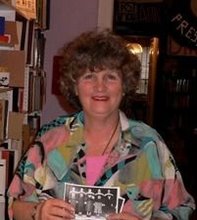
It is not me
I have just received a call from a friend that my e-mail has been broken into and a message is going around that I need money to be sent immediately to Nigeria. Please ignore all messages. I cannot get into my e-mail to change things yet but I am trying. If you read this and know any of my friends, please help spread the word of this. thank, Joan

Tuesday, August 3, 2010
Old Friends on Bondi Beach, July 2010, But First, Uluru


 First let me explain the first image in my last post as one of my readers has requested. That is Uluru at sunset. Uluru is the world's largest free standing monolith and a sacred site of the Anangu people of the central Australian desert. Here in la mia nuovia lingua is a welcome by Nellie Paterson, a leader of the Anangu. "Questa 'e terra degli Aborigini e voi siete i benvenuti. Guardatevi intorno ed imparate, in modo da capire gli Aborigeni e che la cultura aborigena 'e forte e viva." This is the land of the Aborigines and you are welcome. Look around and learn so that you will understand the Aborigines and that Aboriginal culture is strong and alive."
Uluru rises from the flatness of the vast desert, 400 K from Alice Springs. Our friends, Dawn and Linda and La Professoressa walked around its base, the respectful way to take in this monumental being, a procession of 8 miles. I could only do four but I was grateful to be at its base looking up at its caves and the dream-time stories imprinted on its rock face.
I have been trying to work on the long piece about Elliot, my brother. I am spending more time at home, and I have the feeling that I must do some things. As I worked over the first draft, two insights came to me about what I had learned from my life, two failings that at least I can now claim as wrested knowledge. First, is that I have been careless in my life, careless of others and the second closely connected insight is that I indulged my over whelming need to protect myself as soon as I was old enough to be able to do that. I thought I could escape the rawness of my childhood by putting my emotional safety before all other things. You know, I do not know who is reading this, a strange way to break open one's 70 year old heart, but the pressure of life's changes compels me to make this offering.
Thursday, July 29, 2010
New York Buddies Below the Equator, July 2010


Dawn and Linda, whom I have known for over 35 years, carrying our New York history, walking down the main street of Alice Springs, in the red center, il centro rosso, of this land. From Columbus Avenue in Manhattan to the Todd River bed, usually the dry avenue of aboriginal families making their way of out their desert communities into the bustle of Alice, but now running with renewed waters--a rare sight. but even rarer for me was the wonder of my two old friends, comrades for so long, within arm's reach. I have accepted, I think, that I may never see old friends again, that the distance is too great, the travel too demanding, too expensive, that even in this modern world, the change of continents, of generations, of physical health, makes a difference. To stand with Dawn and Linda along the flanks of Uluru, the sacred monolith of ancient and present peoples, on a rainy evening, just the four of us alone with the curves, the valleys, the hidden routes of this breathing being of red stone, was wonder entire. For many years, we had walked under the glowing skyscrapers, the neon monoliths of Times Square, together, and now, in my 70th year, our women's friendship encircled the world.
Thursday, July 1, 2010
La Professoressa With Her Rooster

First may I send my love to Stephanie and Lepa for their constant friendship that knows no barriers, except at times my own laziness. And to the seven other followers, thank you.
Now while I moan about my aching bones, La Professoressa goes about touching up our home, here seen putting up three wild duck sculptures that I bought for her almost ten years ago. And she is wearing her carpenter's belt, known fondly here as "The Rooster." I get a special thrill when I see her wearing leather, as some of you might know, and so once a year, she girds her loins. La Professoressa is 12 years younger then me and is often the day to my nights. Amidst all the sad certainties of so many national policies, amidst my anger and sorrow and restless knowing that the power to inflict and control and decide for others must be interrupted, moments of desire seize me, moments of life that lie in the bend of a neck or the curve of an arm, in the wonder of La Professoressa saying, I love you, darling and then turning back to her 80 students' essay waiting to be read.
In two days time, our friends from New York will walk into our arms. Dawn and Linda, my upper West Side buddies. This will keep me going.
Wednesday, June 23, 2010
La Mia Amica, Patrizia con Eleanor Roosevelt
 Every week for almost a year, my dear friend Patrizia and I have been attending Italian classes at the Center for Italian Studies here in Carlton. She now far surpasses me in her mastery of the language but I am so grateful for this opportunity to parlare, leggere e ascoltare to this lingua bella. At this time in my life, when my body is so uncomfortable, I stand on new strade, ascolto nouve canziones--the songs of Gino Pauli, full of the sea and the salt of you as he sang so many years ago. And always the voice of that soon to be human wooden thing, "un semplice pezzo di legno" that would turn into the voice of possibility--"Non farmi male!" if only loved. Do not hurt me, the voice of the people of so many nations, the voice of so many whose bodies long for the cessation of pain, for the fullness of the belly, for the bounty of water. Le ossa mi fanno male, my bones hurt, my friends. Non farmi male for us all. No more hurt.
Thursday, June 17, 2010
Their Deaths, Our Lives
 Furkan Dogan, 19, in his senior year at Kayseri High School; he hoped to become a doctor.
 Cengiz Akyuz, 41, married, three children aged 14, 12 and 9.

Cengiz Songur, 47, six daughters, one son

Fahri Yaldiz, 43, firefighter, married with four sons
Cetin Topcuoglu, 54, former amateur soccer player and Taekwondo champion, married, one son. His wife, Cigden Topcuoglu, was also on board. She survived.

Cevdet Kiliclar, 38, reporter, webmaster for Humanitarian Relief Foundation (IHH). Married, one daughter, one son

Ali Haydar Bengi, 39, ran a telephone repair shop, degree Arabic Literature, married, four children, ages 15, 10, twins, 5.
Ibrahim Bilgen, 61, electrical engineer, member of the Chamber of Electrical Engineers of Turkey, political candidate. Married, 6 children.
Necedet Yildirim, 32, an IHH aid, married, one daughter, aged 3, photo to follow.

Necedet Yildirim, 32, an IHH aid, married, one daughter, aged 3, photo to follow.
On June 3, 2010, I received these images and information about the men killed on the Mavi Marmara. Occupations depend on creating a faceless opposition. In that night, these are the ones who lost all, in an attempt to change a brutal national policy. 30 children had their worlds shattered in international waters by the children of a people who know what it means to come home to empty homes, to have only photographs to look at of those murdered because a Sate decreed they were no longer worthy of living. Was this what it took for Israel to relent on its blockade of Gaza, to finally understand that not all the public relations campaigns, all the scripted responses, the memorized falsities, the declarations that this is what good Jews should say when confronted with bad press, will make these faces and all the rest of the Palestinian disappeared, go away. Their stories will be told, in the novels pouring out of the Palestinian imagination, by exiled poets and on the stages of the world. Like the tellings of another time--in the saddest of historical ironies, in the saddest loss, or refusal, of historical knowledge. How many more times will our human hearts fail each other.
Thursday, June 10, 2010
Words from Daniel for my 70th birthday
It is three weeks ago now that we celebrated my 70th birthday. I want to share with you what my friend Daniel wrote for the occasion--my 31 year old friend. Many years ago now, I co-edited a book with John Preston called "Sister and Brother: Lesbians and Gay Men Talk about Their Lives Together." John died from AIDS before he saw the finished book which was not a success then back in 1995. Neither many lesbians or gay men bought the book, each I imagine thinking the other was other. I dedicate these words, Daniel's words about our life together, to the memory of John.
Joan
This is your birthday, so this is my love letter for you.
I first met Joan when I was writing my PhD at the University of Melbourne.
She had come from New York, a stranger to the city.
I too had come from far away and our connection was instant: two strange shapes that felt out of place but drawn together through our queer sense of the world.
Of course, I had first met Joan through her writing. Eve Sedgwick introduced me to Joan through the pages of "Epistemology of the Closet."
In this book, Sedgwick calls out Joan's name and the other courageous pro-sex survivors of the sex wars as pioneers. These writers, say Sedgwick, challenged feminist orthodoxies of the time which pitted lesbians and gay men against one another. For Sedgwick writing in 1990, these challenges themselves "led to a refreshed sense that lesbians and gay men share important though contested aspects of one another's histories, cultures, identities, politics and destinies." (37)
Although it may sound too grand to say in this public place, in the privacy of our relationship I know that I have been privileged to experience that sharing, that intersection and that mutual implication with Joan in a profound and personal way.
That sharing, that intersection, that mutual implication. When Joan would read my dissertation drafts she would always say, "why do you always write in threes?" From the start Joan could always read my rhythm. I want to say that it's kind of like that old Bette Midler song from "Beaches," I know you by heart, because our friendship is just about as camp and as dorky as that.
Ever since our first meeting at the restaurant when I went fumbling through your clothes looking for you lost ear-ring while the English Department sat around us lunching to our endless obsession with pyjama parties--we have fun. She makes me feel young again.
In our current writing project, we have been reflecting on intergenerational perspective on queer archiving. And perhaps it wasn't until I had been to New York to visit the ephemera files, the books, banners, posters, badges and spunky dyke volunteers who worked at the Herstory Archives that I really understood Joan's Australia. For Joan, those archives were her compass--here Joan has had a chance to look at life from different eyes, out of space, out of time. And at times this reorientation has been scary but it has let Joan see life from a wholly different side. Joan is often wont to say that I introduced her to the language of post-structuralism, to queer theory and Foucalt--but it has been an honour of my life to constantly bring Joan back to the fact that her work, as Sedgwick makes clear, has helped lay the foundations of queer studies today. As her friends we have all helped her reorient herself to her histories, to herself, in this new land. And I have seen how Joan's relationship with Di here in this beautiful home they have created has inspired Joan to paint life across a new canvas and to find new languages for her life in this vivid, different world.
And we are all here today because Joan has captured our hearts. The way her eyes glisten when she smiles, so full of such a celebration of life and its pleasures. The way her jaw changes position beneath her soft cheeks as she rails against war, oppression and violence. Joan is like a power source. Knowing her, we know how she organized all those lesbians across New York City to get the Archives happening. She can hustle and she can schmooze and she can carouse. And she can certainly make me swoon.
During my PhD years, Joan and Di did the bureaucratic dance of visas and immigration and when the bureaucrats weren't smiling on Joan's application to remain here I remember doing the gentlemanly thing and offering my hand. As it turns out, she turned me down, but she did it so tenderly.
In a world of managerial universities, Joan has been a true academic mentor. She has nurtured me and kept believing in me and it is only now that I have an academic job that I can look back on all those years of uncertainty with a real and deep appreciation for her love and encouragement. People all over the world can tell stories about how you have inspired and driven them and on behalf of all those people who can't be here today, I want to say thank you.
Joan is a friend in both the summer and the winter, embracing the pleasure and facing life's hardness. Through our more recent times in hospitals you have been a rock. Who knew that sudoku and the letters of Rosa Luxemburg could get you through the eye of the storm? Thank you Joan--you have a gift for making a path out of the debris.
When Joan prepares for a public speaking engagement, she will spend weeks collecting clippings and fragments from here and there to rustle through and read from. A narrative emerges from the constituent parts, so, to close, I have two:
from Walt Whitman's "Crossing Brooklyn Ferry"
"What it it then between us?
What is the count of scores or hundreds of years between us?
Whatever it is, it avails not--distance avails not, and place avails not,
I too lived, Brooklyn of ample hills was mine
I too walked the streets of Manhattan island, and bathed in the waters around it,
I too felt the curious abrupt questionings stir within me..."
Second, this is from a 1995 song by Chris Knox:
Seems like you and me are stuck together
Feels like we've never been apart
Seems like you are my skin of supple leather
Feels like your blood pumps through my heart
Seems like you and me are one another
Feels like we couldn't be un-joined
Seems like I am your sister, you're my brother
Feels like a phrase yet to be coined
Seems like I am to you a vital organ
Feels like you are to me the air
Seems like without your night I'd have no morning
Feels like you'll always want me there
It we should ever be untethered
If somehow we should end
If we could not go on together
Apart you'd be my good and trusting friend.
Happy Birthday, Joanie
Joan
This is your birthday, so this is my love letter for you.
I first met Joan when I was writing my PhD at the University of Melbourne.
She had come from New York, a stranger to the city.
I too had come from far away and our connection was instant: two strange shapes that felt out of place but drawn together through our queer sense of the world.
Of course, I had first met Joan through her writing. Eve Sedgwick introduced me to Joan through the pages of "Epistemology of the Closet."
In this book, Sedgwick calls out Joan's name and the other courageous pro-sex survivors of the sex wars as pioneers. These writers, say Sedgwick, challenged feminist orthodoxies of the time which pitted lesbians and gay men against one another. For Sedgwick writing in 1990, these challenges themselves "led to a refreshed sense that lesbians and gay men share important though contested aspects of one another's histories, cultures, identities, politics and destinies." (37)
Although it may sound too grand to say in this public place, in the privacy of our relationship I know that I have been privileged to experience that sharing, that intersection and that mutual implication with Joan in a profound and personal way.
That sharing, that intersection, that mutual implication. When Joan would read my dissertation drafts she would always say, "why do you always write in threes?" From the start Joan could always read my rhythm. I want to say that it's kind of like that old Bette Midler song from "Beaches," I know you by heart, because our friendship is just about as camp and as dorky as that.
Ever since our first meeting at the restaurant when I went fumbling through your clothes looking for you lost ear-ring while the English Department sat around us lunching to our endless obsession with pyjama parties--we have fun. She makes me feel young again.
In our current writing project, we have been reflecting on intergenerational perspective on queer archiving. And perhaps it wasn't until I had been to New York to visit the ephemera files, the books, banners, posters, badges and spunky dyke volunteers who worked at the Herstory Archives that I really understood Joan's Australia. For Joan, those archives were her compass--here Joan has had a chance to look at life from different eyes, out of space, out of time. And at times this reorientation has been scary but it has let Joan see life from a wholly different side. Joan is often wont to say that I introduced her to the language of post-structuralism, to queer theory and Foucalt--but it has been an honour of my life to constantly bring Joan back to the fact that her work, as Sedgwick makes clear, has helped lay the foundations of queer studies today. As her friends we have all helped her reorient herself to her histories, to herself, in this new land. And I have seen how Joan's relationship with Di here in this beautiful home they have created has inspired Joan to paint life across a new canvas and to find new languages for her life in this vivid, different world.
And we are all here today because Joan has captured our hearts. The way her eyes glisten when she smiles, so full of such a celebration of life and its pleasures. The way her jaw changes position beneath her soft cheeks as she rails against war, oppression and violence. Joan is like a power source. Knowing her, we know how she organized all those lesbians across New York City to get the Archives happening. She can hustle and she can schmooze and she can carouse. And she can certainly make me swoon.
During my PhD years, Joan and Di did the bureaucratic dance of visas and immigration and when the bureaucrats weren't smiling on Joan's application to remain here I remember doing the gentlemanly thing and offering my hand. As it turns out, she turned me down, but she did it so tenderly.
In a world of managerial universities, Joan has been a true academic mentor. She has nurtured me and kept believing in me and it is only now that I have an academic job that I can look back on all those years of uncertainty with a real and deep appreciation for her love and encouragement. People all over the world can tell stories about how you have inspired and driven them and on behalf of all those people who can't be here today, I want to say thank you.
Joan is a friend in both the summer and the winter, embracing the pleasure and facing life's hardness. Through our more recent times in hospitals you have been a rock. Who knew that sudoku and the letters of Rosa Luxemburg could get you through the eye of the storm? Thank you Joan--you have a gift for making a path out of the debris.
When Joan prepares for a public speaking engagement, she will spend weeks collecting clippings and fragments from here and there to rustle through and read from. A narrative emerges from the constituent parts, so, to close, I have two:
from Walt Whitman's "Crossing Brooklyn Ferry"
"What it it then between us?
What is the count of scores or hundreds of years between us?
Whatever it is, it avails not--distance avails not, and place avails not,
I too lived, Brooklyn of ample hills was mine
I too walked the streets of Manhattan island, and bathed in the waters around it,
I too felt the curious abrupt questionings stir within me..."
Second, this is from a 1995 song by Chris Knox:
Seems like you and me are stuck together
Feels like we've never been apart
Seems like you are my skin of supple leather
Feels like your blood pumps through my heart
Seems like you and me are one another
Feels like we couldn't be un-joined
Seems like I am your sister, you're my brother
Feels like a phrase yet to be coined
Seems like I am to you a vital organ
Feels like you are to me the air
Seems like without your night I'd have no morning
Feels like you'll always want me there
It we should ever be untethered
If somehow we should end
If we could not go on together
Apart you'd be my good and trusting friend.
Happy Birthday, Joanie
Sunday, June 6, 2010
Our June Vigil--We are All Gazans Now
Emily Henochowicz, 21, art student from New York was hit directly in the face with a tear gas cannister at the Qalandiyah checkpoint. Here a Palestinian woman calls for help. 


Standing in the rain and tumult of Israel's national failure


Standing in the rain and tumult of Israel's national failure
Hargit, Geraldine, Hinde, Jean, Sivan, Esme, Alex, Sandra, Hellen, Joan, Di
From Haifa to Melbourne,
Statement of Isha L'Isha
We the women of Isha L'Isha-Haifa Feminist Center express deep shock at the continuing and deteriorating consequences of the siege of Gaza. We express solidarity with women peace activists who acted to break the inhuman siege on women, children and men; a siege that has been preventing basic human freedoms, health services and essential materials.
We extend our support to our sisters in the feminist movement, especially those who went out to exercise their right to protest against an outrageous injustice and found themselves facing a military attack that was a result of a violent state policy.
We call on women and men in Israeli society to resist the attack on the most basic human values, and to join our call--the attack on the peace flotilla is an attack on me. The siege on Gaza endangers us all. Isha L'Isha--Haifa Feminist Center is a multi-cultural feminist collective established in 1983. Our aim is to bring about social change by promoting values of equal rights and equal opportunities for all women; bring about social change by promoting values of equal rights and equal opportunities for all women; eradicating discrimination, violence and oppression of women; and fostering solidarity among women.
From Melbourne to Haifa, to Gaza
On Tuesday night, Students for Palestine called for a mass rally against the Israeli commando raid on the flotilla of aid ships that killed, we think, there may be more, 9 men and wounded many more. I received a call that afternoon asking if I would be willing to speak on behalf of Women in Black, but there was a deeper reason. I would be the only Jewish voice and this is why I said yes, half hoping they would not need me. Daniel was waiting for me on the corner of Elizabeth and Bourke Streets, the closed-to- traffic- main street, where only trams are allowed, bringing their passengers to the two largest department stores of Melbourne, Meyers, and David Jones. Leaning on his arm, I walked past the sight of our monthly vigil, the night sky heavy with clouds towards the already large crowd spilling over into the roadway. I had folded in my pocket a copy of my blog writing prior to this one and a letter I had sent that morning to The Age, Melbourne's largest newspaper. Somehow I knew I would not read from a page if I was to speak. The moment, the pain, the anger was too large for premeditated words. Kim, one of the the organizers, quickly found me and said, yes, I would be speaking and I should stay near the sound truck. Hellen and Sandra, Women in Black friends, joined me and I saw Sivan further back in the crowd and Sol as well from the Australian Jewish Democratic Society. I listened to all those who came before, to the young Palestinian woman just returned from visiting her family on the West Bank, her pain and rage at what she had witnessed filling the night air,to leaders of the Palestinian and Turkish communities in Melbourne to a Green politician to a Maritime Union official to an elderly Imam, and I thought, how can I do this, how can I put my Jewish self with my American voice in this justified mix of rage and hurt. How would I not be the enemy. And then I was the next speaker, and I moved close to the center where I could see the faces all around me and I thought how did I get here, I am 70 years old, recovering from cancer surgery, standing yet again in another street with banners and chants, standing like I stood on broad Washington D.C. avenues;on Park Avenue in New York in front of embassies; in front of swanky East Side hotels hosting Nixon or Reagan or Bush; squeezed into Dag Hammarskjold plaza across from the U.N.; standing in Brown's Chapel in Selma, Alabama getting ready to march to Montgomery, how did I get here in such a far away place in such a time of life--and then I saw the dead men and thousands of Palestinian people whose lives have disappeared, names never printed in our newspapers--just the words, "Four Palestinians shot dead by Israeli Defence forces." I thought of all the Jewish people of conscience I know here, in Israel, in New York, all over the world, who stood beside me. I have never felt so naked, so small as in the moment the microphone was put into my hand. All around me were young Palestinian women and men and in the distance I could see families and older people. I cannot tell you exactly what I said, I know the first words that came out were, "I am just a body.." and "tonight we know the failure of history, that what had happened on that boat and every day at check points and house evictions was not what the Holocaust had taught my Jewish heart." I threw into the night air the Yiddish word shanda, I know I spoke as a Jewish woman, for all the women in the international movement known as women in black, I know I said we have to question the certainties of all nationalisms, I know I spoke of my, our, Jewish solidarity with the suffering of the Palestinians. All the time the faces looking back at me, lips forming the word shanda. And then it was over, for me. As I made my way back to Daniel, the young Palestinian woman who had spoken earlier came over and said she remembered me from another demonstration and it was good to see me again. Several older women wearing head scarves came to me. "Are you the woman who just spoke? Yes. One of the women hugged me and said thank you, it means so much that you took the risk to speak. Our heads rested together for a few seconds, my bare gray curls against the black fabric of her head cover.
Daniel, my dear young friend, again offered me his arm so I could begin my journey back to West Brunswick. I was the smallest moment in this evening I have described, but for me once again I encountered that huge moment of human generosity--the refusal of easy hatreds.
New Book: "Shifting Sands: Jewish Women Confront the Israeli Occupation," edited by Osie Adelfang, an anthology of women writing about the Middle East, with a preface by Amira Hass and a forward by Cindy Sheehan including writing by Starhawk, Anna Baltzer, Alice Rothchild, Sandra Butler and Holocaust survivor Hedy Epstein. Can be found at Amazon.com
Monday, May 31, 2010
"Urgent, we have threat from Israel"
In the darkness of night, seventy miles out to sea, in the international waters beyond Israel, 19 people were shot to death by elegantly armed Israeli soldiers. Perhaps Israel hoped the night would shroud the horror of their young people's actions--give them guns, give them nationalistic fervor, give them heavy doses of Israel's exceptionalism and turn them loose on the "enemy." I am writing words in shock, in despair, in rage--I am taking in the shouts of pain and disbelief from my peace activist comrades around the world, including Israel. We can reach each other, but we cannot stop a nation gone mad and all the others who empower the killers--the American government who pours money into the military coffers of Israel--paying for those helicopters from which the young people lowered them selves onto the boats, paying for those state of the art commando uniforms, the guns which they turned on those marked only as the enemies of the Jewish state. I want to say I love you, all who tonight sit at their screens, as I do, reaching out, so we are not alone with the horror of witness only, we recommit to honoring human life, to honoring each one who died in the darkness of the night, amidst a cargo of hope. We do not know the names or countries of those who have died--that will come in the morning light. We do not know if Hedy survived or did Israeli bullets do what the concentration camps could not. Again, as I have always written, I write from a Jewish heart, Israel is my concern, my burden, my shame--and activism in the face of the brutalities of a mad State is my Jewish heritage.
From on the boats in the flotilla:
Lubna: Greta urgent we have threat from Israel
Greta: Lubna. What is happening?
Lubna: two Israeli ships coming toward us
Greta: Please try to stay on this so I can tweet it
Lubna: they contact the ship asked who we are and dissappeared now they getting close to the ship we can see them stay here 3 boats coming not two 3Israeli boats we are 78 mile from Israel
Greta: I'll keep writing
Lubna: people here their life jackets every body peppering here
Greta: ok. You are the lifeline to our Twitter account.
Lubna: we may loose the wireless, we didn't expect them now, we thought they will arrive at the morning. Please stay in touch with the other boats.
Sent at 10:50 PM on Sunday
Greta : We can't reach anyone
Sent at 10:52 PM on Sunday
Today, I just received word that Hedy Epstein was not on any of the flotilla boats; she is in Cyprus, waiting for another flotilla.
Greta: Where are you? Are you there?
From on the boats in the flotilla:
Lubna: Greta urgent we have threat from Israel
Greta: Lubna. What is happening?
Lubna: two Israeli ships coming toward us
Greta: Please try to stay on this so I can tweet it
Lubna: they contact the ship asked who we are and dissappeared now they getting close to the ship we can see them stay here 3 boats coming not two 3Israeli boats we are 78 mile from Israel
Greta: I'll keep writing
Lubna: people here their life jackets every body peppering here
Greta: ok. You are the lifeline to our Twitter account.
Lubna: we may loose the wireless, we didn't expect them now, we thought they will arrive at the morning. Please stay in touch with the other boats.
Sent at 10:50 PM on Sunday
Greta : We can't reach anyone
Sent at 10:52 PM on Sunday
Today, I just received word that Hedy Epstein was not on any of the flotilla boats; she is in Cyprus, waiting for another flotilla.
Greta: Where are you? Are you there?
Thursday, May 13, 2010
 This old fellow, blind, now sleeps in his front yard, wrapped against the early winter chill. Cello and I walk pass him quite regularly these days and he raises his head to greet what he cannot see. "A good old dog," his owner told me one day. "A wonderful friend to our family." Now he rests where he can do no damage. I have grown more and more aware of how badly animals have fared in our human world--dragged, prodded, pulled, against their will, our constant battering at their dignity. It is all connected, isn't it--arrogant States and arrogant corporations and blinded armies, assumed gender and racial superiorities, all tied to our certainty of the power and right of our will. I wish this old fellow a good journey, he is loved and safe and one day he will be gone from his patch. I honor him.
Tuesday, May 11, 2010
A Body in Time

Cello and the doorbell all going off at once. I open the door and there is a carefully wrapped package from Florida, USA, left on the veranda by the postman whose orange- clad back I can just barely see as his motorbike scoots onto Dawson Street. A gift for me on the eve of my 70th birthday from an old friend, an old lover. I sit, my back aching from my recent surgery, unwrap Skeezy's gift: an old boxed set of Replique, the perfume I wore as a young femme on the lower East Side of New York.
Dear Joan 4-29-10
So many years, so many accomplishments, so many memories. Yet we are still here, still talking, and still caring. You are as young to me on your 70th as you were on your 20th.
Enjoy this piece of your past that my senses will never forget and--have a very Happy Birthday.
As ever, Skeezy
Skeezy--now a grandmother several times over, and I learn over and over that the body leaves its touchings long into the time of our lives; thank you, old friend, for carrying that young woman and her perfume back to me.
Saturday, May 8, 2010
Morning Light
 Yesterday, after a night of rare rain, the garden was touched by the magnificence of early morning light. That path of old stones is the work of La Professoressa, who between reading student papers, writing her essays and looking after Cello and me, shapes her native garden. Yesterday, I received word of the death of Rhonda Copelon, a feminist teacher and activist long associated with the Queens College Law School, the pioneering law center that I watched grow into being as I taught all those years. I have no easy words for these deaths, of comrades, of colleagues, sometimes even of adversaries. It is the human way, but oh so hard. And so the light, a needed simple splendor.
Wednesday, May 5, 2010
Archives Never Leave Me
As many of you know, I have lived with archives most of my life. Now in my Australian home,


I once again put up the shelves to give a home to the writers, thinkers, who give me life. This rich vision of history,
 This rich vision of history,
touch, story telling never sits quietly. An archives never does, always making present something we name the past. Here, also, I am using my archival passions to preserve the history of Melbourne's Women in Black Community that has been standing vigil for peace in the Middle East since 1988 and so I present you these images of two documents--a poster announcing the 1989 vigil and an 1991 issue of the Australian Jewish Democrat newsletter with an article by Marg Jacobs about why she rises early on Saturday mornings to get to downtown to join the vigil. Many histories cross in these documents--women's Australian history, Lesbian history since several of the women in Women in Black in the past and now are gay women, the history of resistance, Jewish and otherwise, the history of the Australian Jewish left. Documents irrepressible in their aging declarations, documents that now move into a digital age but carry with them an old tenacity, the struggle to do better.

Monday, May 3, 2010
Our May Vigil and a New York Comrade, Harry Weider


Harry Wieder, always concerned with making power do more for those whose dignity was under daily assault


Our Women in Black May Vigil in the streets of Melbourne


Here we are, Sivan, Hellen, Hinde, Sandra, Sue, Esme, myself, and once again, Hagrid from Hebron, in her red jumper, intensely engaging in discussion with a young Palestinian-Australian man. After, we always have coffee and talk, plan more actions, find out what other struggles we are involved in. At the table you see us all reading a petition against the Northern Territory Intervention Act and its racist implications. All of this, this swirl of street life, of passionate engagements, of my comrades' beautiful faces, of Hagrid looking up at me, saying she is in exile from her own tribe because of her peace work in Israel, standing vigil at check points to try to limit the soldiers' arrogance--I am in exile she says and I hold her and say that no, we will make another country of the heart, for all the Jews who are painted as the enemy by our own people, for all the Jews on hate lists and black listed from jobs and podiums, another country of the heart and conscience. With rising European anti-Semitism and rising Israeli right wing nationalism, we will hold each other close and never fall silent in the face of another people's tragedies.
You know I am far from the streets of New York but from time to time the New York Times brings me news that takes me back to the gay activist days of the 70s and 80s and the dear people who struggled in the streets and in the city council hearing rooms to gain civic respect for gay people and others. Sadly, because it marked his death, I once again saw the face of Harry Weider, a small man with a large forehead, a fierce heart and an irrepressible commitment to justice in life or as the Times said, "a gay, Jewish, nearly deaf and otherwise disabled dwarf from Queens." Harry and I often ran into each other at demonstrations or at planning meetings. I remember him sitting at the archives table one afternoon as we talked about the state of gay social struggle. He often offered me a drive home from actions. "The only child of Holocaust survivors," Harry pushed and pulled others to pay attention. He was coming from a community meeting, the Times went on to tell me, when he was hit by a taxi in mid street. Charlotte Weider, his 86-year-old mother, said "In spite of my very strong feeling to protect him,I could not hold back his good." Hold back his good. Dear dear Harry. You gave New York your life.
Thursday, April 29, 2010
A Week Before
Here we are Cello and I and our friend Jaquie getting us in her sights, in front of the Port Phillip Bay down St. Kilda way . What I wish for all, the sun, the sea, no hunger, a warm presence pressed against my side, his life touching mine. A week later, I was back having cancer surgery far from the sun and the sea. Thank you all who have written and those who have reached me in so many ways. I am mending now--should be able to do our monthly Women in Black vigil on Saturday. I will go to rest now. Kisses for those who would want them.
 . What I wish for all, the sun, the sea, no hunger, a warm presence pressed against my side, his life touching mine. A week later, I was back having cancer surgery far from the sun and the sea. Thank you all who have written and those who have reached me in so many ways. I am mending now--should be able to do our monthly Women in Black vigil on Saturday. I will go to rest now. Kisses for those who would want them.
 Wednesday, April 21, 2010
No Words for a While
Our international Women in Black community was saddened to hear of the death of Biljana Kovacevic-Vuco on April 20 in Belgrade. "During her long career as a peace movement and human rights activist, Biljana was the founder of the Human Rights Council of the Center for Antiwar Action in Belgrade and the head of the SOS helpline for the victims of political,ethnic and workplace discrimination." I think of Lepa and of all the women of the Belgrade community and know they have lost a dear dear comrade. We all have.
I will be quiet for a while. As soon as I finish this post, we are off the the Royal Women's Hospital for my surgery. I want to leave you with a place to go for the finest writing I have read growing out of the what is happening in Palestine Israel now--it is the journal writing of Jane Toby, an American woman from the Hudson Valley Women in Black community. Find her at http:://hudsontowestbank.blogspot.com/ You will not let her go.
Also look to our womeninblack.org.au website
Thank you for your words, your thinking, your caring
Joan
 activist, Biljana was the founder of the Human Rights Council of the Center for Antiwar Action in Belgrade and the head of the SOS helpline for the victims of political,ethnic and workplace discrimination." I think of Lepa and of all the women of the Belgrade community and know they have lost a dear dear comrade. We all have.
I will be quiet for a while. As soon as I finish this post, we are off the the Royal Women's Hospital for my surgery. I want to leave you with a place to go for the finest writing I have read growing out of the what is happening in Palestine Israel now--it is the journal writing of Jane Toby, an American woman from the Hudson Valley Women in Black community. Find her at http:://hudsontowestbank.blogspot.com/ You will not let her go.
Also look to our womeninblack.org.au website
Thank you for your words, your thinking, your caring
Joan
Sunday, April 18, 2010
Again But I am One of the Lucky Ones
Dear Friends, and even those who think I am an enemy of the State of Israel, I just received the news that I have uterine cancer. Once again an embarrassed doctor who was convinced all was alright until the cellular drama was caught on that other small screen, the pathology slide. I almost laughed, how many more cancers can a girl have--colon,breast and now my underused uterus. We are in the midst of planning my 70th year celebration, my poor Professeressa, she too must enter into the fray once again. This is the glory of life, celebration and wearing down. Cello could not be denied his afternoon walk, not on this walk pictured here--this is my New York walk in Riverside Drive where I and my dog friends, first Denver and then Perry, walked every day of every season, amidst the autumnal oaks, and Spring cherry blossoms and sometimes my old pal, Liz Kennedy, walked with me as she took in the antics of every creature. Cello and I walked in a different terrain and as we did, I thought I am one of the lucky ones. Already my doctor has made an appointment for me with the "specialist" at the Royal Women's Hospital. I thought again of all the cancer patients that get stopped at the borders, that can't reach help, those whose countries have never been able to find a way to get care to all who need it and I thought, we need Cancer without Borders, we need every cancer patient who has been lucky enough to get treatment to march on the governments of the world--starting first with those who purposely make the road to treatment almost impossible--in the name of State restrictions. Open the check points for people needing treatment. Israel with some of the finest hospitals in the world, with doctors who, as David Brooks and Thomas Friedman love to tell us, are the great entrepreneurs of the medical world, just on the other side of the militarized check point, open the check points and let the cancer patients through. A beginning. Cancer without Borders, care without borders. I am one of the lucky ones.
 We are in the midst of planning my 70th year celebration, my poor Professeressa, she too must enter into the fray once again. This is the glory of life, celebration and wearing down. Cello could not be denied his afternoon walk, not on this walk pictured here--this is my New York walk in Riverside Drive where I and my dog friends, first Denver and then Perry, walked every day of every season, amidst the autumnal oaks, and Spring cherry blossoms and sometimes my old pal, Liz Kennedy, walked with me as she took in the antics of every creature. Cello and I walked in a different terrain and as we did, I thought I am one of the lucky ones. Already my doctor has made an appointment for me with the "specialist" at the Royal Women's Hospital. I thought again of all the cancer patients that get stopped at the borders, that can't reach help, those whose countries have never been able to find a way to get care to all who need it and I thought, we need Cancer without Borders, we need every cancer patient who has been lucky enough to get treatment to march on the governments of the world--starting first with those who purposely make the road to treatment almost impossible--in the name of State restrictions. Open the check points for people needing treatment. Israel with some of the finest hospitals in the world, with doctors who, as David Brooks and Thomas Friedman love to tell us, are the great entrepreneurs of the medical world, just on the other side of the militarized check point, open the check points and let the cancer patients through. A beginning. Cancer without Borders, care without borders. I am one of the lucky ones.
Thursday, April 15, 2010


Here, our April Women in Black vigil: Sue, Hellen, Geraldine, La Professoressa, a visitor from Haifa and myself. Judith Butler, an old friend, speaks to the University of Berkeley Student Senate about divestment:
The first thing I want to say is that there is hardly a Jewish dinner table left in this country [USA]--or indeed in Europe and much of Israel--in which there is not enormous disagreement about the status of occupation, Israeli military aggression and the future of Zionism, binationalism and citizenship in the lands called Israel and Palestine. There is no one Jewish voice, and in recent years, there are increasing differences among us, as is evident by the multiplication of Jewish groups that oppose the occupation and which actively criticize and oppose Israeli military policy and aggression. ..
Of course, we could argue on what political forms Israel and Palestine must take in order for international law to be honored. But that is not the question that is before you this evening. We have lots of time to consider that question, and I invite you to join me to do that in a clear-minded way in the future. But consider this closely: the bill you have before you does not ask that you take a view on Israel. I know that it certainly seems like it does, since the discussion has been all about that. But it actually makes two points that are crucial to consider. The first is simply this: there are two companies that not only are invested in the Israeli occupation of Palestinian lands and peoples, but who profit from that occupation, and which are sustained in part by funds invested by the University of California. They are General Electric and United Technologies. They produce aircraft designed to bomb and kill, and they have bombed and killed civilians, as has been amply demonstrated by Amnesty International and Human Rights Watch. You are being asked to divest funds from these two companies. You are NOT being asked to divest funds from every company that does business with Israel. And you are not being asked to resolve to divest funds from Israeli business or citizens on the basis of their citizenship or national belonging. You are being asked only to call for divestment from specific companies that make military weapons that kill civilians. That is the bottom line....
Lastly, let me say this. You may feel fear in voting for this resolution. I was frightened coming here this evening. You may fear that you will seem anti-Semitic....To struggle against fear in the name of social justice is part of a long and venerable Jewish tradition;it is non-nationalist, that is true, and it is committed not just to my freedom, but to all of our freedoms, So let us remember that there is no one Jew, not even one Israel, and that those who say that there are seek to intimidate or contain your powers of criticism. By voting for this resolution, you are entering a debate that is already underway, that is crucial for the materialization of justice, one which involves having the courage to speak out against injustice, something I learned as a young person, but something we each have to learn time and again. I understand that it is not easy to speak out in this way. But if you struggle against voicelessness to speak for what is right, then you are in the middle of that struggle against oppression and for freedom, a struggle that knows that there is no freedom for one until there is freedom for all. There are those who will surely accuse you of hatred, but perhaps those accusations are the enactment of hatred. The point is not to enter that cycle of threat and fear and hatred--that is the hellish cycle of war itself. The point is to leave the discourse of war and to affirm what is right. You will not be alone. You will be speaking in unison with others, and you will, actually, be making a step toward the realization of peace--the principles of non-violence and co-habitation that alone can serve as the foundation of peace. You will have the support of a growing and dynamic movement, intergenerational and global, by speaking against the military destruction of innocent lives and against the corporate profit that depends on that destruction. you will stand with us, and we will most surely stand with you. (printed in The Nation, April 13, 2010)
And from South Africa:
Judge Goldstone has been banned by the South African Zionist Federation from attending is grandson's bar mitzvah--this as an act of retribution for Goldstone's report to the United Nations. As one Jewish blogger said, "What has happened to our people?"
What has happened to our people?
Tuesday, March 30, 2010
Your words as always give me more then I deserve


I
know I have worried some; I have lived in this body so long, struggled with its own struggles, trying to hold it dear, to recognize the dailiness of its own stumbles--the cellular dramas that from a distance form me. The ct scan showed no cancer--but why then, I said between sighs of relief, do I feel so ill. The next day I bled and more will be done. I am of the lucky ones, those who are not stopped at check points, those who are not turned away from help for so many reasons, those for whom flood waters or famine have not swept away the paths to aid. For the first time on these pages, I felt embarrassed by my words, by my posturing, talking about the stars when I felt like I was dying. No more of this.
I want to share with you the words of two women, one is my friend, the other I have met for the first time through her blog, "Hudson to West Bank," which follows Jane Toby through the streets of the West Bank and the beaches of Tel Aviv. First, the words of Alex Nissen, my friend here in Melbourne who has been in Haifa for the last four months.
Tear Gas Brings Memories:Jewish Home, Fascist State?
As an Ashkenazi (a Jew from European descent) Israeli who was born in Australia to refugee parents, I have the luxury of living in Israel whenever I choose to, with full rights. Like other Jewish citizens, I have the freedom to move, access to hospitals, universities and water. What a luxury. So how can I call this place home and fascist at the same time?
Last Friday I went to a Palestinian village called Bil'in which is near Ramallah and about a two hour drive south of Haifa, my town, along Road Six, a highway built alongside the Apartheid Wall that surrounds the Palestinian towns of Qalqilya and Tul Karm, two towns that are completely surrounded and isolated by the Wall. of course, there are no acknowledging their existence; after all they are not in Israel, they are Palestinian towns, a way of thinking that is difficult to comprehend when you first arrive in this place.
Last Friday was a special day because it marked five years of struggle against the Apartheid Wall that is being built on Palestinian lands near the village of Bil'in. It has also been five years of popular demonstrations, suppressed by force. And nearly two and a half years since the Israeli High Court ordered a change to the route of the Apartheid Wall. Demonstrators came from all over Israel and Palestine to show support for the village's struggles for freedom of movement, of provisions for the basic needs of daily life, things that I, as an Israeli and Australian, have always taken for granted.
The last time I went to Bil'in was many years ago. I have been going to the Palestinian Occupied Territories to document and bear witness to human rights abuses. I was raised to respect human rights and freedom especially since my own Jewish culture suffered as a result of anti-Semitism and the Holocaust. I went to this demonstration because of those values of respect for human rights. What I witnessed was an assault on freedom and humanity by the Israeli army.
There were over a thousand people of all ages, mothers, fathers, children, grandparents marching to express, not only their solidarity with the desire for freedom, but also in solidarity for the right to live in dignity, to farm one's own land and to live one's own life without oppression.
Some of the Palestinian men managed to move the temporary wire fence and put Palestinian flags on the other side. At this stage, I did not see the Israeli army and thought it was strange. But then the Israeli army came. The sprayed stink liquid that made people sick, used sound grenades, and shot dozens of tear gas canisters; there was nowhere to hide. As we, the elderly and the young, ran to escape the tear gas behind and beside us, I stopped and looked up to see it raining tear gas ahead of us. The soldiers shot numerous tear gas rounds at the front of the demonstration, at the side and then ahead of us so that we would be trapped by the thick white smoke. There was no point in running. No space was safe from the possibility of being hit by tear gas. The air was thick with gas, people couldn't breathe. An elderly woman collapsed, people helped carry her out. Many people fell, they couldn't breathe and they couldn't move. I felt that there was nothing I could do to escape, I couldn't breathe, my skin was on fire and my lungs were struggling for air like every one else. I had no forgotten my history or why I was here. How sad it is and ironic, I thought, that the Israeli Army threw so many gas canisters at civilians demonstrating for human rights, and here I am, a Jew, I am gassed by a Jewish army.
I managed to get some distance away to turn around, only to see the Israeli Army continuing to shoot dozens of tear gas canisters everywhere, and in disbelief, I witnesses the Israeli Army shooting at the ambulance which was soon surrounded by thick gas. I have only these words to describe the injustice I witnessed. I can escape. I can go home, where I have running water to take a shower and wash off the day's poison and trauma. But what of the others, how long would the gas cling to their clothes, their skin?
How many Palestinians need to suffer before we all take a stand to stop the violence? Israeli human rights' organizations along with the Israeli peace movement and Palestinians are calling for you to help by supporting peace and democracy in a country that's spiralling out of control.
In this country, democracy only belongs to the privileged like me, and not to my Palestinian sisters and brothers.
Alex Nissem
Women in Black
Coalition of Women for Peace
Film of demonstration and march, Friday the 19th, February 2010:http://www.youtube.com/watch?v=quSVqqEao4c
I still feel the pull of the vast possiblities of the dark skies, but Alex and others draw me back to these our human streets, our imagined nationalities where armies clad in steel break the dreams of mere citizens. How naked this makes us all.
In the photograph, Alex, her blue scarf streaming free, stands next to La Professora, here in St Kilda with the bay behind them. Before she left for Israel/Palestine.
Thursday, March 25, 2010
Questions, Always Questions
Today I will find out if my cancers have returned--perhaps. I am not afraid, I am curious and I am aware of the flow of life around me, the hot sun and gentle wind, Cello curled up in the shade on the corner of the veranda, workmen building steps in the back, books around me--Paolo Bacigalupi's "The Windup Girl," futuristic visions that question and yet carry within their shattered cities, the possibilities of care and concern, of hope unknown, stuttering like the steps of Emiko, or the endlessly twisting the challenges of survival that speed Hock Seng through the back allies of the Kingdom, the rumblings of the massive Megodonts who turn the wheels of the factories, the ancient made new, of new organic and inert combinations that produce their own forms of urgent "new people" questions, of courage, of nourishment, of cooperation while the old uglinesses of greed and domination bite at the heels. Thailand in the future, not New York, not London, and that alone is a light into the future. Our "topography of failure," environmentally, economically, socially, swims with life. I want to look to the stars now, to the vast regions of unknowns where what ever is human or life-filled will shape hope out of first appearing darkness. Here in Australia, we almost touched the future--when norrie mAy welby became for just a day the world's first person to be issued sex-not- specified documentation by the Australian authorities, a person without a state approved sex and still a person; however, daunted by their own courage, the same authorities rescinded their declaration, 24 hours later. So one way I face my own mortality is expanding the circle of my questions, throwing off the ballasts of "this- is- how- it- has- to- be."
Olivera has just called from Brisbane, she knows of topographies of failure as she knows of flight and the push of self re-invention.
I read also "The Classroom," by Simon Mawer, a story of modernity and hell, of bodies and glass houses, of Fascism and touch and always "The Journal of Helene Berr,"--
When I write the word Jew, I am not saying exactly what I mean, because for me that distinction does not exist; I do not feel different from other people, I will never think of myself as a member of a separate human group, and perhaps that is why I suffer so much, because I do not understand it at all. I suffer from the spectacle of human beastliness. I suffer from the sight of evil falling on humanity; but as I do not feel I belong to any particular racial, religious or human group (because such feelings always implies pride), all I have to keep me going are my inner debates and reactions, my conscience. I remember a remark Lefshetz made when we were at rue Claude-Bernard and his speeches in support of Zionism disgusted me: 'You have forgotten why you are being persecuted.' That's true.
But the Zionist ideal seems to narrow. Any exclusive grouping, whether Zionism or the hideous fanatical Germanism we are witnessing, or even chauvinism, always contains an excess of pride. I can't help it; I shall never be at ease in any such group." (December 1943)
Olivera has just called from Brisbane, she knows of topographies of failure as she knows of flight and the push of self re-invention.
I read also "The Classroom," by Simon Mawer, a story of modernity and hell, of bodies and glass houses, of Fascism and touch and always "The Journal of Helene Berr,"--
When I write the word Jew, I am not saying exactly what I mean, because for me that distinction does not exist; I do not feel different from other people, I will never think of myself as a member of a separate human group, and perhaps that is why I suffer so much, because I do not understand it at all. I suffer from the spectacle of human beastliness. I suffer from the sight of evil falling on humanity; but as I do not feel I belong to any particular racial, religious or human group (because such feelings always implies pride), all I have to keep me going are my inner debates and reactions, my conscience. I remember a remark Lefshetz made when we were at rue Claude-Bernard and his speeches in support of Zionism disgusted me: 'You have forgotten why you are being persecuted.' That's true.
But the Zionist ideal seems to narrow. Any exclusive grouping, whether Zionism or the hideous fanatical Germanism we are witnessing, or even chauvinism, always contains an excess of pride. I can't help it; I shall never be at ease in any such group." (December 1943)
Subscribe to:
Posts (Atom)