Wednesday, May 20, 2009
La Professora's Night, University of Melburne, May 20, 2009


First, I want you to know that I and others have created a new website for Women in Black, Melbourne--womeninblack.org.au--and here much of my writing documenting our activities, concerns and first hand reports of our version of "the facts on the ground" in Palestine/Israel will be reported. Much is happening in Melbourne, many people from the Palestinian and Jewish communities are working together to stop the suffering of the people of Gaza, to push for sanity and relief from unfettered national and military power.
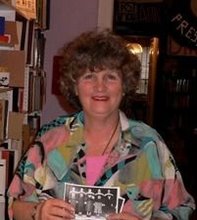
Last night, La Professora delivered her Inaugural Professorial Lecture, "Pushing Feminism off the Map? International Law in Times of Crises," to a packed house at Melbourne University where old friends from her youth community worker days, from her women's refuges' days, from her mid life law student days, and her contemporary colleague and friends gathered to listen and celebrate. I had had the privilege of caring for my Professora as she worked on her talk--seen here occupying my artist's shed for the polishing of her ms--with Cello under her chair picking up bits of thought that might have fallen off her pages.
What I saw last night besides a beautiful woman mapping her public thinking for forty minutes was a turning point in a journey; in 1991, Di had entered law school as a 38 year old community worker who had walked the streets with the homeless youth of St Kilda, sat with and calmed women escaping domestic violence into shelters she and other feminists had created in the 1970s, Di having grown tired of fighting the government for more permanent change turned to the law looking for another way to push power into caring. What I saw was the culmination of both a personal journey, my dear one's, and the history of an Australian feminist community--supporting, creating, struggling, growing older and still trying to find strategies for change. In the first photograph, Di stands with two other women who entered law school when she did; they studied together, they pushed each other to continue when it all looked too hard--Munya and Fahna. Both are now solicitors--that's trial lawyers in American English. Patricia, my Pattie, who helps us set up our social action websites sits with Marg, a woman who has devoted much of her life to social change movements--both dear friends to me now and Di's long time comrades, others here as well--Peter, Di's brother, Michelle, a trades union leader, Joel, our dear friend and partner of Daniel, and Maureen, a teaching colleague. And a group of Di's students, past and present--never never forget the students.
I have never seen La Professora so happy, so at peace and when we returned home to Cello and our garden, we sat and shared the one glorious apple our tree had produced. At one moment in the evening, when all had gathered for celebratory drinks, Di thanked old friends and new for all they had made possible and then, she turned in my direction, looking where she thought I might be--I was sitting in the back of the room, my leg having given out, not able to see her but enjoying just being there, and as if the sea was parting, the room broke into two halves so nothing was between my love and me; she raised her glass and said, and most of all, I thank my partner, Joan--doing the PH.D brought me to New York and her, and that was my greatest gift. We had gifted each other, but we had needed help along the way so thank you all who made the flourshing of this transcontinental love possible.
From the flyer: The lecture grew from discussions at an international workshop held in Onati, Spain in 2008. A larger version will be published in 2010 in a collection entitled Between Resistance and Compliance? Feminist Perspectives on International Law in an Era of Anxiety and Terror.
Thursday, May 7, 2009
In Women's Hands
We are All New Profile--2


April 26, 2009. This morning the Israeli police descended upon the homes of political activists, members of the feminist movement New Profile, which acts for the civil-ization of society in Israel and against the undue influence of the military in the life of the country. (Jewish Peace News)
You see, there can be no linear line to these days, to the telling of these events, to the sadnesses, the wrong choices,--fire that Professor, banish that speaker, call them antiSemites, particularly the Jewish ones, put them on the S.H.I.T list so we can flush them and their ideas away, but little by little the wall is cracking, more and more are finding the strength to speak out, to find ways to travel to Gaza, to the West Bank, to see for themselves, to carry the images, the news out of the walled in places and many are women. And as the police rushed into the homes of the New Profile women in Israel, they were laying the basis for new coalitions, for others who had stayed on the sidelines to see how fragile a democracy can become right under your eyes, as you are looking the other way, as you are watching the parades and walking in the past, past familiar pains. Whatever it takes, you say, to keep Jews safe,but little by little more and more Jews will become endangered--first it is the peace activists, then the reporters who try to map the movements of the military, of the police, then the dissenters, then those who do not take oaths of allegiance and here I see Rosa, waiting through out this tumble of words, waiting her turn to tell how she is part of this all--her words--Freedom only for the supporters of government, only for the members of the party--however numerous these may be--is no freedom at all. Freedom is always the freedom of the dissenter. Rosa writing from her prisons, from her "unfreedoms" as she calls them in a 1918 letter, her crime opposing the first world war, her disbelief in nationalisms--calling on German young men not to slaughter French young men, Rosa soon to be smashed in the face with the end of a rifle, and then shot in the heart, dumped in a canal, from which now her image emerges, dripping with urban waters, her little book, Letters from Prison, being republished in Tel Aviv and Ramallah, last month, two centers opening in her name in these cities, her Jewish voice once again in the air and all the histories looking on, at each other. "About six months after Israel's attorney general publicly announced an effort to criminalize dissent, state authorities have upped the ante in their "war"--as the daily Ha'aretz called it last September--against Israel's youth and against the broad grassroots movement of young Israelis who avoid serving their compulsory time in the military... On 26 April, a day before Israel's Memorial Day, Israeli police produced an absurd piece of political theatre...As if facing down dangerous organized criminals, they raided the homes of six activists in different parts of Israel, who were then detained for interrogation...computers confiscated, the arrested told they could not communicate with other members of the community for 30 days. Among those arrested: Analeen Kish, aged 70, ceramics artist, daughter of a family of the "Righteous Among Nations"; Miriam Hadar, age 51, editor and translator; Amir Givol, resident of Jerusalem; Sergei Sandler, resident of Beer Sheva and Roni Barkan, resident of Tel Aviv. The police edict, Do Not Speak of these events for 30 days, has been transformed into endless speaking about New Profile, about what these raids mean, about the police violence against subsequent protesters, (see youtube video, New Profile Demonstration in Israel, 30-4-09, 17:30, Tel Aviv, yisraelpnm), all over the Internet we are speaking, organizing, in Israel, in New York City, where ever peace activist feminists gather, Jewish and non-Jewish, the discussion will go on. In Rosa's month.
New Profile speaks: "The militarization of Israeli society harms the sacred principles of democracy, freedom of speech and political freedom. For people who thought that only Israeli-Arabs were being framed for criminal political activity, this morning was proof that none of us can be sure of the permission to express ourselves freely regarding the failings of Israel's society and regime." From Jewish Peace News, April 27, 2009, 4:55pm
(Read all of Rosa Luxemburg's "Letters from Prison" on the free Luxemburg Internet Archives)
Wednesday, April 29, 2009
Rosa and the Bund: We are All New Profile

First I want to thank Pat for helping me set up a new website for Women in Black here in Melbourne, http://www.womeninblack.org.au/. I hope if any of you are members of Women in Black around the world, you will write and tell me the times of your vigils so we can post them on the site. You can contact me directly on the website. And in a way, this website and Pat sharing her expertise as a gift to us is connected to what I want to write about on this closing day of April.
How sane all these words sound now--how I was going to write about the connections between the April 19th commemoration for the Warsaw Ghetto Uprising that I attended at the Jewish Holocaust Center here in Melbourne, an annual gathering of the survivors and their children of the Polish Jewish community who were active in the Bund and still are. My friend, Michelle, sings in the Yiddish choir, Michelle, daughter of two parents who worked with JOINT (Joint Distribution Committee) first in the liberated camp of Belsen to care for the stateless Jewish survivors, and then in Africa, her father, a member of the French Resistance, Michelle born in Morocco, whose voice carries her diaspora wanderings, Vienna, Paris, Cambridge, Melbourne and now who sings and speaks in Yiddish. You see I cannot write in one line about all of this, about the crossings of our Jewish histories, about the Israeli raids on the home of New Profile feminists, about the prison letters of Rosa Luxemburg, about the lobby that is not a lobby, AIPAC, about the Partisans--"Fun grinem palmenland biz vaysn land fun shney/Mir kumen on mit undzer payn, mitundzer vey/Un vu gefaln s'iz a shrptis fun undzer blut/Shprotsn vet dort undzer gvure, undzer mut." (From the lands of green palm trees to lands all white with snow, We are coming with our pain and with our woe, And where'er a spurt of blood did drop, Our courage will again sprout from that spot.) from Zog Nit Keyn Mol!, The Hymn of the Partisans. You see I cannot speak of one without remembering all, I cannot escape the voices that soar over crumbling walls, Jewish or Palestinian, I cannot turn my eyes from the rough grabs of Israeli state police forcing protesters to the ground, dragging them hair first into the police stations, where they disappear behind a turn in the wall, or the young woman of Swat valley, held motionless by other women so she cannot deflect the public flogging deemed necessary by the Taliban code of morality, how to resist the flailing arms of hate, of women beaten to the ground, into silence, into desperation because they question. The Voice of Medea Benjamin, a member of America's Code Pink: "While I was being tackled by the security guards at Washington's Convention Center during the AIPAC conference for unfurling a banner that asked "What about Gaza," my heart was aching. I wasn't so bothered so much by the burly guards who were yanking my arms behind my back and dragging me along with 5 other CODEPINK members out of the hall. They were doing their job. What made my heart ache was the hatred I felt from the AIPAC staff who tore up the banner and slammed their hands across my mouth as I tried to yell out: "What about Gaza? What about the children?" "Shut the f---up. Shut the f---up," one staffer yelled, red-faced and sweating as he ran beside me. "This is not the place to be saying that shit. Get the f--- out of her."
If not there, where so many could change the course of events, then where? Where do we ask the questions, where will we not be called anti-Semitic, self hating Jews, duped leftists, effeminate Jews of the Diaspora who do not love our guns, where can we use words that describe reality like apartheid, racism, like Palestinian Bantustans that make a state a struggling impossibility, where can we in our imaginations say, the siege of Gaza reminds me of other sieges, against the Jewish people when they had no freedom of movement, no escape possible from state hatred, where can we say our memories, our histories are tormented by what is being done in small Palestinian villages in the way of the Settlements, the beatings, the terrors, use whatever it takes to make them give up their claim on that desert home or that one, no reporters, threatened activists, soldiers, always the soldiers, and the Settlers themselves, they will clean the land of these unwanted ones with cudgels and fists, no reporters, no police to protect, vigilante nationalism let loose on ancient hills but supported with modern money from modern companies like Leviev's Africa-Israel--once we know who is responsible we can take action and the people of the West Bank villages of Bil'in and Jayyous become part of our dreams of responsibility--the old, the young, real people kept in the shadows until another "fact on the ground" is accomplished, their eradication as a Palestinian village.
Thursday, April 23, 2009
Beth by the Sea, March, 2009
Here I have a new world of friends, friends who have been most generous in welcoming me into their life, into the history they shared with La Professora and the one we are making together. Both Beth and Pat, her partner, have shared their home by the sea with us, including Cello which is no mean feat. He is small but his hair goes everywhere--slivers of tough Schipperkee black hair. Walking with Beth along the Apollo Bay shoreline brings me close to the heart of this land, this continent island, where desert, bush, cliffs end at the immense expanse of the Northern and Southerns Seas at one end and the Indian Ocean at the other. In some odd way, geography here is everything even though it is so finite, so bounded; the Red Center with its holy rock, Uluru; the ancient Indigenous art galleries, protected by overhangs of old, old rock, once bottom of the sea rock, now hidden away in crevices known only to the elders, the white chalk drawings of sea serpents and hands, older gods and their retinue of symbols, cross hatched with ochre and umber and then all of this tumbling to the gleaming cities by the sea--Sydney, with its ferries hurrying workers home across the bay, the shining lights of the Harbour Bridge, the flying roofs of the Opera House, the hanging foxes so close to the engines of commerce, the rich rich living of the Bay Side dwellers. Fish and chips on Manley Beach, the shark nets along the beach seen so easily from the ferry fronting cafes--always a kind of danger lurking in the depths, in the interior vastness where tourists or the foolish can loose their lives so easily, can fall to the desert vastness or the churning turns of the craggy skinned crocs who have seen more then we will ever know. And here I am, trying to learn what I can, trying to edge open the strangeness, the unNew York Cityishness of this place, trying to find ledge of stone I can stand on--and it is my new friends, Alex and Michelle, Karen, Daniel and Joel, Mitch and Rose, Ann and Jane and Jane again, Beth and Pat and more who have propped me up and shown me the possibilities of comfort in this ancient sea made land made island. 

Wednesday, April 22, 2009
My 1950s Self
In the 1950s, my life was made possible by the kindness of one Roz J. and her mother and father whom welcomed me as Roz's best friend into their Bayside, Queens home. My mother at the time was under indictment for embezzlement and was entertaining a particularly invasive, to me, boyfriend. When home, I slept with a knife under my pillow in case he came near me again as well as to ward off the chilling chaos that was my mother. Roz befriended me at school and time and time again, I took refuge in her family's modest home, the first house I had ever entered, the first place I saw a husband and wife in the same bed, the first time I experienced what was a girl's room in the 1950s--Roz's pink flowered wallpapered bedroom. Her father, a large good humored man worked as a kosher butcher in upper Manhattan. I watched with wonder the rhythms of domesticity--the father still in his blood marked apron coming in the door, embracing his daughter and upon seeing me, calling out his little joke--Hi Hershey. Roz's mother, a beautiful and kind woman, always included me in their dinners; in this family setting, comfort food took on new meaning. I still remember the first time I ate at Roz's table macaroni and cheese. That is me, looking funny in what appears to be a kind of cowgirl outfit and a little later, perhaps in 1955, that is me wearing the bobby socs, hush puppies and wide skirt of high school dress. I had never seen these photos before and as far as I know they are the only ones that exist of me from this era and again I owe it all to Roz and her husband, whom I also knew way back then, for sharing them with me. How awkward I look, but how familiar that large body is still to me today, thighs too big, hair a little strange and then the phone call image, me feeling safe enough in Roz's kitchen to flirt with the camera, clad in flannel pajamas which I probably borrowed from Roz. Now a grandmother, Roz kindly had one of her children scan these images and send them to me. Not even the archives in Brooklyn--which has all my papers up until I came to live in Melbourne, Australia--1999 on-- has these images but now they will. Only deprivation can make such things seems so important. Who cares what Joan Nestle looked like in 1953 or who helped make her life possible? If my work has lived in the world in any meaningful way, it is only because people like Roz along the way gave me the comfort, the precious sense that not all was to be protected against, that I did not always have to be a sentinel on my own borders.
Subscribe to:
Posts (Atom)